What is digital marketing? What is digital marketing is the modern practice of promoting products and services through the internet and electronic devices like smartphones and computers. This strategic approach replaces traditional physical media like billboards by connecting businesses with their ideal target audience through highly active online channels.
By utilizing essential assets such as corporate websites, social media networks, video platforms, and targeted email marketing, companies can move their advertisements straight onto the screens where people spend their time.
Ultimately, this data-driven method allows brands to deliver real-time solutions to potential customers at the exact moment they need help, helping to build deep trust and convert regular internet users into loyal consumers.
Why Digital Marketing Is Important for Small Businesses
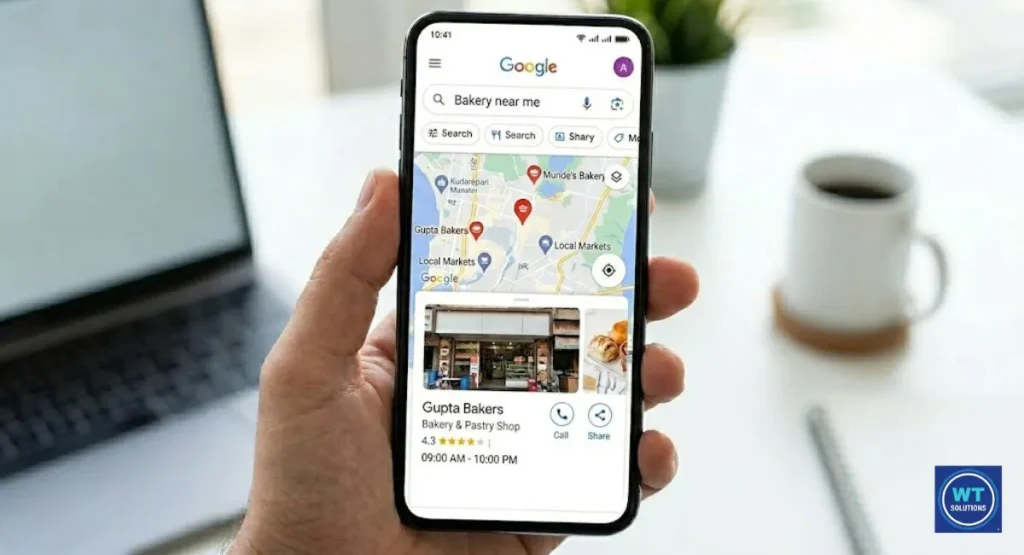
Digital marketing is important for small businesses because it offers an affordable way to reach local customers and compete with large corporations. It removes the need for large advertising budgets by allowing small shops to target specific neighborhoods and track every cent they spend.
Small businesses usually have very tiny budgets and few workers. They cannot afford to buy expensive television commercials or radio spots like global brands do. Online marketing gives these small shops a fair chance to win customers without spending a fortune.
A local storefront can set up a free online profile and appear on digital maps. When people nearby search for services this year, that local storefront shows up right alongside the biggest companies in the world.
Recent data shows that local searches on mobile devices have risen significantly. People constantly search for terms like “food near me” or “clothing store open now” while walking down the street.
If a small business has a strong online presence, these nearby customers will find it instantly. This brings foot traffic to the physical shop without the owner needing to print thousands of paper flyers.
Another major reason this matters is the power of tracking data. In traditional advertising, you pay for an ad but have no way to prove how many people saw it or bought something because of it.
Online tools solve this issue by showing you exactly who clicked your link and what actions they took. This detailed tracking saves small businesses from wasting money on ads that fail, letting them focus entirely on what works. To understand this more deeply, read our complete guide to Why Digital Marketing is Important for Small Businesses.
Top 10 Benefits of Digital Marketing
The top benefits of digital marketing include lower advertising costs, the ability to reach a global audience, and the tools to track your exact financial returns in real time. These benefits help any business grow faster and spend its money much more wisely than old-fashioned methods allow.
| Benefit | What It Means for Your Business |
| 1. Reach a Larger Audience | You can connect with millions of people across the country or around the world instantly. |
| 2. Cost-effective | You can launch campaigns with a tiny budget and avoid expensive print ads. |
| 3. Increased ROI | Spending money online usually brings a much higher return on your investment. |
| 4. Increased Brand Awareness | Regular online posts help thousands of people learn about your business name and logo. |
| 5. Greater Flexibility | You can change your ad text, budgets, and target groups at any moment. |
| 6. Be Visible 24×7 | Your website and social profiles stay open to catch new buyers while you sleep. |
| 7. Run Multiple Strategies At Once | You can use social media, emails, and search ads at the same time. |
| 8. Various Content Forms to Play With | You can use videos, text, photos, or audio clips to share your business message. |
| 9. Higher Content Engagement | Users can comment, like, and share your promotional posts immediately. |
| 10. Measurable Results | Free tracking tools show you the exact number of clicks, views, and sales you get. |
These ten points prove that online channels offer control that traditional media cannot match.
Instead of guessing if your marketing works, you get clear proof every day. You can see which images people like, which words make them click, and how much money you earn from every campaign.
This high level of control makes it much easier to scale a business safely. You do not have to sign long contracts for physical billboards or wait weeks to see if a newspaper ad brings in customers.
You can test an idea with a few dollars, see if it works, and grow your budget as your sales increase. To learn more about using these advantages, check out our report on the 10 benefits of digital marketing.
20 Advantages and Disadvantages of Digital Marketing
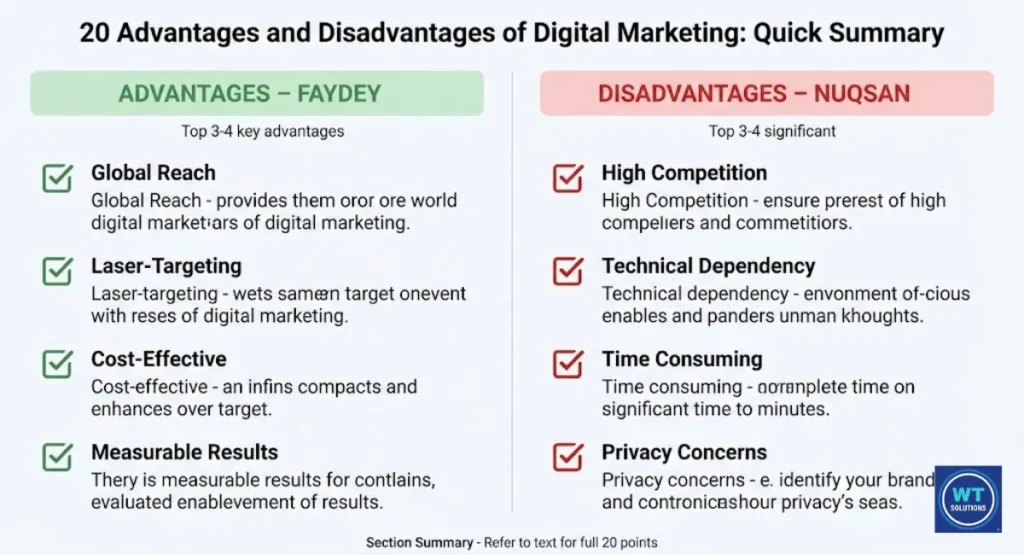
Digital marketing offers massive advantages like precise audience targeting and low starting costs, but it also has disadvantages like intense competition and constant changes in technology.
Understanding both sides of this online landscape is necessary if you want to protect your budget and build a winning plan.
10 Major Advantages of Digital Marketing
Using online channels to promote your business provides powerful rewards that old media tools cannot offer. Here are the top ten advantages explained in detail:
- Global Reach: You can connect with millions of active internet users across the entire world right from your home. Traditional ads limit your message to a single town or city. Online platforms remove these borders, allowing a small home business to find international buyers instantly.
- Laser-Focused Targeting: You can filter your audience to show your ads only to people who have a real interest in your specific product. Instead of wasting money showing your brand to random people, you select users based on their exact age, location, habits, and hobbies.
- Highly Cost-Effective: Online campaigns are much cheaper and more budget-friendly than old traditional methods like television or newspapers. You do not need thousands of dollars to start, making it safe for businesses with tiny budgets.
- Measurable Real-Time Results: You get exact data on your dashboard showing how many people clicked your link and bought your items instantly. This removes all the guesswork and shows you exactly which campaigns are bringing in money.
- High Return on Investment (ROI): Spending a small amount of money online usually brings back a much higher percentage of profit and sales. Because your tracking is clear and targeting is precise, you do not waste resources on people who do not care about your items.
- 24/7 Marketing Automation: Your online campaigns and automated email systems keep working to generate leads even while you are completely asleep. Software tools can talk to customers and send welcome messages around the clock.
- Instant Adaptability: You can change your images or edit text in a live advertisement immediately if you notice a mistake or poor performance. With physical print ads, you cannot change anything once the paper is published.
- Direct Customer Engagement: You can talk directly with your buyers through public comments and private messages to quickly build strong brand trust. This two-way communication builds deep loyalty that keeps customers coming back.
- Hyper-Personalization: You can send unique discount codes and custom product recommendations based on a user’s exact past browsing history. Addressing a customer by their name and understanding their habits makes them feel valued.
- Long-Term Organic Traffic: Search optimization and regular content creation bring a steady stream of free visitors to your website for multiple years. Once an article ranks well, it generates free clicks without extra ad costs.
10 Major Disadvantages of Digital Marketing
While the rewards are massive, running online campaigns also comes with serious difficulties. Here are the top ten disadvantages you must prepare for:
- Intense Online Competition: Millions of global brands are fighting for the attention of the same internet users every single day. Because it is so easy to start, the online space is crowded, making it harder for new brands to stand out.
- Unpredictable Algorithm Changes: Large search engines and social platforms change their rules often, which can drop your website traffic overnight. Marketers must constantly update their skills to survive these sudden updates.
- Heavy Time Commitment: Planning campaigns, making engaging videos, and writing high-quality articles requires hours of daily effort. If you do not post consistently, your audience will quickly forget about your business.
- Public Negative Feedback: Unhappy buyers can leave negative public complaints on your official profiles that can damage your business name. Managing your online reputation requires extreme patience and professional customer support.
- Specialized Skill Requirements: Running successful campaigns requires you to spend time learning complex software tools, copywriting, and data tracking. If your team lacks these skills, you may have to hire outside help.
- Widespread Use of Ad Blockers: Many internet consumers download data blocking apps that completely hide promotional advertisements from their screens. This means a portion of your target market may never see your paid promotions.
- Data Privacy and Legal Risks: Modern web rules and strict user tracking regulations make collecting customer data much harder and riskier. Businesses must follow strict legal guidelines to avoid heavy fines.
- Ad Fatigue and Banner Blindness: Consumers see hundreds of promotions daily, causing them to completely ignore or scroll past generic online advertisements. Your material must be unique to break through this mental block.
- Costly Click Fraud: Malicious computer programs or direct competitors can repeatedly click your paid links to completely drain your ad budget. This fake traffic costs you money without generating any real sales.
- Total Technology Dependency: If your host server crashes, your website goes down, or an application breaks, your entire marketing operation stops. Relying entirely on digital tools leaves you vulnerable to technical issues.
Balancing these forty factors requires a clear understanding of the online marketplace. While the advantages make growth faster, the disadvantages show that you must plan for specific hurdles.
To dive deeper into balancing these pros and cons, read our analysis of the 20 Advantages and Disadvantages of Digital Marketing.
Modern Challenges With Digital Marketing
The main modern challenges with digital marketing are user information overload, strict data privacy shifts, and sudden changes to search platform rules. These hurdles mean businesses must create higher-quality content and build direct relationships with their audience to stay successful.
The internet is crowded with noise. Consumers see hundreds of business messages, emails, and video ads every time they open their phones. Because people are flooded with information, they have learned to ignore basic advertising.
Generic messages that offer no real value are skipped instantly. This means companies must work much harder to create genuinely useful material that earns attention rather than demanding it.
Another major challenge this year involves data privacy shifts. Modern web browsers and phone operating systems now block third-party tracking tools by default. This makes it harder for marketers to track user behavior across the web and show personalized ads.
Businesses can no longer rely on simple tracking files to find buyers. Instead, they must create high-quality websites where users willingly share their email addresses and preferences.
Frequent updates to social and search algorithms also create uncertainty. A business might get thousands of free website visitors one week, only to see that traffic drop after a sudden system update. To survive these shifts, brands must avoid relying on just one platform.
They need a balanced plan that protects their business from sudden traffic drops. For more advice on beating these hurdles, read our detailed guide on challenges with digital marketing.
9 Core Marketing Strategies for Small Businesses

Small businesses can use nine core strategies to grow online, including local profiles, review collection, social media updates, and direct email newsletters. Small brands should select two or three of these methods to start, so they do not spread their limited resources too thin.
- Optimize Your Google Business Profile: This is a free profile that allows your business to show up on local maps and search results. Small shops must fill out their exact hours, address, and phone number so neighbors can find them easily. A fully complete listing immediately builds trust with local shoppers.
- Leverage Customer Reviews: Gathering positive ratings from your happy buyers is the fastest way to convince new users to trust your brand. You should ask your customers to leave feedback online. Displaying these real experiences on your website proves that your business is reliable and helpful.
- Implement Local SEO: Local search engine optimization focuses on improving your website so it appears when people search for services in your exact city or neighborhood. By using specific location words in your text, you attract nearby customers who are ready to visit your physical storefront.
- Build a Targeted Social Media Presence: Small brands should not try to be on every platform. Pick one or two networks where your ideal buyers spend their time, such as Instagram or LinkedIn. Share consistent updates, talk to your followers, and show the human side of your company.
- Launch Email Campaigns: Email marketing involves sending helpful updates, tips, and special discounts directly to the inboxes of people who signed up on your site. This strategy keeps your business fresh in the minds of consumers and costs very little money to run.
- Create Compelling Content: This strategy focuses on writing helpful articles and making useful videos that answer common customer questions. Instead of just selling items, you offer valuable resources that teach your audience how to solve their daily problems.
- Form Local Partnerships: Partnering with other non-competing businesses in your neighborhood helps both brands grow together. You can host joint events or share each other’s services online. This strategy introduces your business to a new, pre-verified audience for free.
- Run Strategic Paid Ads: This is a model where you pay a small fee to show ads on search pages or social networks, targeting specific audiences. By spending a small daily budget on highly focused groups, you can generate immediate website traffic and sales.
- Launch a Loyalty or Referral Program: It is much cheaper to retain an existing customer than to acquire a new one. Creating a program that rewards customers with discounts when they buy again or invite their friends helps your business build a steady stream of long-term support.
Choosing the right mix of these strategies depends on your specific business goals. A local bakery might focus heavily on map profiles and short video clips, while a consulting business might focus on detailed articles and email newsletters.
By focusing on a few core platforms, you save time and get a much better return on your investment. To build the perfect plan for your company, look at our breakdown of 9 Marketing Strategies for Small Businesses.
The Power of SEO and Inbound Marketing
Inbound marketing is a method that acts like a magnet to pull customers to your business naturally by providing solutions to their problems. Instead of interrupting users with unwanted pop-up ads, you publish highly useful resources that people actively search for online.
Search Engine Optimization is the engine that makes inbound marketing work. When an internet user has an issue, they type a question into a search bar. If your website contains a clear article that solves that exact problem, the user will click on your link.
This type of traffic is incredibly valuable because the visitor is already interested in your topic. They are looking for answers, and you are providing them without forcing an immediate sale.
[User Has a Specific Problem]
│
▼
[Types Question Into Search Bar]
│
▼
[Finds and Reads Your Helpful Article]
│
▼
[Trusts Your Brand and Buys Product]
This simple process creates a steady stream of free website visitors over a long period. While a paid ad stops bringing in customers the exact second you stop paying for it, an optimized article can bring in users for months or years.
This builds long-term trust because consumers see your business as a helpful expert. To learn how to set up this system for your brand, read our guide on SEO and inbound marketing.
What Is a Marketing Partner, and Do You Need One?
A marketing partner is an outside agency or professional consultant that manages your online business campaigns for you. They handle the daily tasks of building websites, tracking data, writing articles, and running ads so you can focus on running your business operations.
Deciding whether to hire an outside specialist depends on your available time, current skills, and budget limits. Many small business owners try to do everything themselves. They try to make products, handle customer service, manage accounting, and run complex ad campaigns at the same time.
This often leads to extreme exhaustion and wasted money because online advertising platforms require constant attention and deep technical knowledge.
Do You Need a Marketing Partner?
│
├── No Time + Budget Available ──► Hire a Partner
└── Has Free Time + Low Budget ──► Learn In-House
If your team is small and has no time to learn complex software, hiring an outside expert is an excellent investment. They bring specialized tools and years of experience to make sure your budget gets real results.
However, if you have an employee who loves technology and has extra time, you can train them to handle your campaigns in-house. To understand how to choose the right agency for your business, read our checklist on what is a marketing partner.
Is Digital Marketing Legit or a Scam?
Digital marketing is a completely legitimate, trillion-dollar global industry that real companies use every day to find customers and grow their sales. It is a professional career path based on data analysis, psychology, and software management, just like traditional advertising.
The reason some people worry that it might be a scam is because of dishonest individuals online. Many bad actors sell expensive internet courses promising to make you rich overnight using “secret tricks.”
These empty promises are completely false and give the industry a bad name.
Real online advertising does not rely on magic tricks or overnight secrets. It requires consistent work, high-quality content, and careful budget management to see steady progress.
Real Industry vs. Online Scams
│
├── Real Industry ─► Focuses on website traffic, customer tracking, and real product sales.
└── Online Scams ─► Promises overnight wealth, secret loops, and high returns with zero work.
To tell the difference between real practices and scams, always look at core business metrics. True digital campaigns focus on things like website visitors, phone calls, and product sales. If someone claims they can guarantee top search spots or instant wealth with zero effort, stay away from them.
When done correctly, online promotion is one of the safest and most reliable ways to build a company. For more tips on avoiding bad actors, check out our report answering is digital marketing legit.
Conclusion: How to Get Started with Digital Marketing
Building an online presence does not require a large corporate budget or an advanced technology degree. Any business can launch a successful plan by taking small, consistent steps every single week.
First, build a clean website that loads quickly and looks great on mobile phones. Your website serves as your digital storefront, and all your future campaigns will guide people back to this main page.
Second, claim your free local map profiles on major search platforms so nearby customers can find your physical location, hours, and phone number easily. Third, pick just one social network where your ideal buyers spend their time and share helpful tips or behind-the-scenes updates three times a week.
The secret to long-term digital growth is simple consistency. Do not try to master all nine strategies in your first week. Start with one simple channel, look at your tracking numbers every weekend, and listen closely to what your customers ask for online.
By consistently offering real value to your audience, you will build a trustworthy brand that brings a steady stream of new buyers straight to your business.