
A digital marketer drives business growth by executing data-backed online strategies to capture target audiences, manage conversion metrics, and optimize digital ad campaigns daily. Their structured routine balances technical web analytics with creative content production to satisfy search engine intent and maximize brand revenue.
Understanding what does a digital marketer do daily reveals a dynamic mix of data configuration and creative execution. Every morning begins with a comprehensive performance audit, tracking active traffic origins and checking real-time data streams to protect marketing budgets.
Once the system numbers are verified, their focus shifts to optimizing live PPC campaigns by fine-tuning bidding rates, resolving broken code tags, and refining automated email workflows.
The rest of the day is dedicated to producing high-value assets that scale organic traffic across search systems. Because businesses rely heavily on this continuous stream of digital consumers to survive, financial compensation in this industry remains exceptionally high.
The comprehensive global breakdown below presents the latest annual earnings based on experience level and geographic location:
| Experience Level | United States (Annual USD) | United Kingdom (Annual GBP) | Canada (Annual CAD) | Australia (Annual AUD) |
| Junior / Entry Level (0-2 Years) | $45,000 to $60,000 | £25,000 to £35,000 | $50,000 to $65,000 | $60,000 to $75,000 |
| Mid-Weight Specialist (2-5 Years) | $68,000 to $85,000 | £38,000 to £52,000 | $70,000 to $90,000 | $80,000 to $105,000 |
| Senior Manager / Director (5+ Years) | $95,000 to $140,000 | £60,000 to £90,000 | $100,000 to $145,000 | $120,000 to $170,000 |
What Is a Digital Marketer?

A digital marketer is a data-driven professional responsible for managing a brand’s online presence through search engines, social networks, email channels, and paid media. They bridge the gap between businesses and consumers by building structured, trustworthy digital funnels.
Unlike marketing managers from the past who bought static print ads, an internet marketing worker measures human behavior in real time. They track every single pixel view, click, form completion, and product order instantly.
This wealth of information helps them understand consumer pain points and make changes before a business wastes its financial resources.
When a company grows, it needs to understand how these professionals scale operations. Whether working alone or inside a collaborative business team, a digital marketer spends their day creating clear answers to customer problems, building consumer trust, and ensuring that search engines can easily find their client’s website content.
Core Daily Responsibilities of a Digital Marketing Specialist
The core daily responsibilities of a digital marketing specialist include monitoring performance data, adjusting active promotions, producing valuable content, communicating with online communities, and broadcasting targeted email segments.
These ongoing workflows guarantee that a brand’s web infrastructure remains fast, error-free, and visible to online buyers.
1. Monitor Analytics
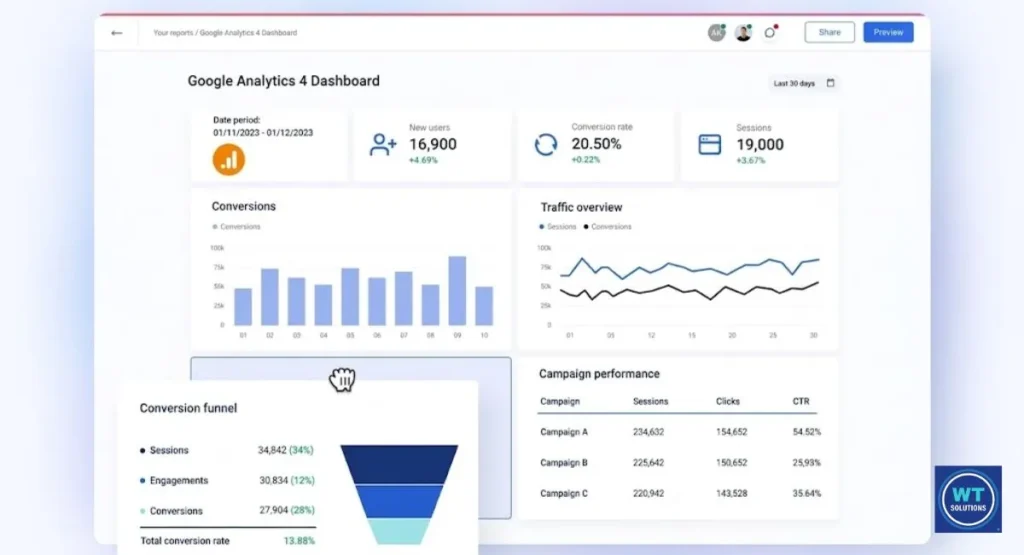
Monitoring analytics involves inspecting live tracking dashboards every morning to analyze website traffic numbers, traffic origins, and digital user interactions. This daily routine provides a real-time health check on all enterprise web channels.
This daily task prevents businesses from losing customer leads. The specialist opens tracking software to read clean GA4 data streams, inspect server-side tracking configurations, and check real-time user paths. Knowing how to measure digital marketing success relies entirely on setting up these clean data pathways so key indicators like conversion rates, cost per acquisition, and lifetime value are perfectly precise.
If an e-commerce shop stops processing transactions suddenly, the digital marketer investigates the data tracking systems to find the technological block. They review important numbers like the bounce rate, which shows if people leave a page too fast, and the conversion rate, which tracks actual purchases.
When a business owner notices a sudden drop in their monthly sales, they immediately ask their marketing expert, “Why is my website not getting traffic?” The marketer answers this question by digging into the traffic sources, checking if search algorithms have changed, or inspecting the site for technical bugs or indexing coverage errors that block users.
2. Optimize Campaigns
Optimizing campaigns means altering live advertisement bidding rates, rewriting low-performing ad copy, and narrowing down audience targeting profiles to maximize return on investment. Marketers execute these changes continuously to protect budgets and scale profitable assets.
Continuous optimization stops a business from overspending on bad promotions. Marketers review active conversion pixels to see exactly which ads generate actual sales.
If an advertisement on a search engine charges too much money but generates zero product sales, the marketer updates the targeted age brackets, alters geographic parameters, or stops the campaign entirely. They look at cost per click metrics and cost per acquisition numbers to balance the budget.
This constant tuning ensures that the company keeps its customer acquisition cost as low as possible while scaling up overall revenue.
3. Create Content
Creating content refers to researching user search intent, drafting comprehensive educational guides, and designing functional media layouts for online publication. This task ensures that a website consistently provides accurate, authoritative answers to user queries.
Building comprehensive text assets creates immense brand authority over time. Marketers write thorough guides that make complex industry systems simple to understand for everyday consumers.
They focus on clear phrasing and structured layouts so that automated information systems can read, understand, and share the information easily. This practice builds long-term authority and ensures that the business becomes the primary online resource within its specific industry niche.
4. Engage Audiences
Engaging audiences involves tracking public brand mentions, responding to consumer questions on social feeds, and managing public customer reviews across web directories. This responsibility humanizes an organization and fosters user loyalty through direct, helpful communication.
Daily community communication establishes high consumer trust. Marketers use an active, helpful voice to resolve customer complaints, clarify shipping terms, and express gratitude to long-time buyers who leave nice remarks.
This direct human interaction transforms casual web browsers into loyal, long-term brand supporters who share the company’s message with their own social circles.
5. Manage Email Marketing
Managing email marketing involves drafting targeted newsletter copy, segmenting user lists by intent, and building automated behavioral email drip sequences. This workflow allows a business to cultivate long-term leads and drive direct sales without relying on third-party channels.
Email lists are highly secure marketing assets because the business communicates directly with people who have given explicit permission to be contacted. Marketers review open rates to evaluate their text subject lines, and they study click-through percentages to see if their body copy successfully motivated subscribers to click a link to visit the store.
They also clean the lists daily by removing inactive addresses to keep delivery scores perfect.
Hour-by-Hour Breakdown of a Digital Marketer’s Day
An hour-by-hour breakdown outlines a strategic daily routine that alternates between morning analytical audits and deep creative production blocks. This clear division prevents administrative fatigue and guarantees that urgent technical glitches are resolved before long-term projects begin.
9:00 – 9:30 AM: Morning Check-In
The morning check-in is an initial 30-minute operational block dedicated to scanning communication channels, triaging client emails, and establishing the day’s high-priority tasks.
The professional enters the company chat program, checks their inbox, and marks high-priority actions on their daily calendar. They resolve critical items, like a broken payment button or an ad account alert, before starting any other projects.
9:30 – 11:00 AM: Analytics Deep Dive
The analytics deep dive is a technical evaluation session where a marketer extracts raw channel metrics to discover traffic dips and track conversion pathways. This block of time is set aside for comprehensive data entry and deep performance reviews across all internet properties.
The marketer opens tracking programs to evaluate yesterday’s web performance and track natural traffic changes. They input these metrics into an internal file to monitor long-term trends and protect the website’s search engine positions.
11:00 AM – 12:30 PM: Campaign Optimization
Campaign optimization is a late-morning administrative window focused on adjusting paid ad bidding budgets, pausing non-converting placements, and testing fresh headlines. Marketers use the fresh data insights from their morning analysis to adjust active promotional budgets and update active ad media.
They enter paid ad platforms to raise bidding amounts on keywords that earn money and cut spending on phrases that waste money. They also add fresh headline text variations to see which style catches the customer’s eye.
1:30 – 3:30 PM: Content Creation & Campaign Setup
Content creation and campaign setup is a deep focus block reserved for producing high-authority resource articles, constructing newsletters, and scheduling multi-channel media campaigns. The afternoon is reserved for deep content building, research, and setting up future marketing assets without daily text interruptions.
The specialist shuts down their email view to write authoritative blog articles, structure informational newsletters, and assemble social media schedules. This focused approach ensures all online text remains clear, useful, and fully capable of answering exact user queries.
Daily Tasks By Digital Marketing Specialization
Daily schedules fluctuate drastically depending on a marketer’s specific industry niche, migrating from technical script optimization to high-impact community building. While generalists touch every digital area, specialized practitioners concentrate their technical expertise on a single branch of digital acquisition.
SEO Specialist’s Daily Tasks
An SEO specialist focuses on improving organic search positions by optimizing technical website architecture, internal link graphs, and content relevancy maps.
They spend their hours adjusting page structures, analyzing semantic keyword gaps, fixing crawl errors, and organizing words so search platforms can easily read the website.
Their daily schedule includes:
- Finding valuable, high-intent search terms that customers use when looking for help online.
- Fixing slow-loading pages, debugging rendering errors, and updating robots.txt files to manage how search engines explore the site.
- Building clear, helpful informational structures that cover a topic completely from start to finish to satisfy automated answer engines.
- Checking Google Search Console dashboards to ensure no technical errors hurt organic visibility.
By executing these tasks, they prove to stakeholders “why is seo important for business” growth. When a company ranks at the top of search listings naturally, it stops paying for every website click. This free, organic traffic builds sustainable visibility over time, turning search engines into a non-stop source of new customers without growing the advertising budget.
PPC Specialist’s Daily Tasks
A PPC specialist designs, deploys, and manages paid digital acquisition budgets across search engines and social platforms to generate immediate customer leads.
Their core goal is to maximize the return on ad spend by continuously auditing tracking pixels and fine-tuning programmatic auction bids.
Their daily schedule includes:
- Adjusting cash bids on competitive search terms to keep ads at the top of the page.
- Writing short, persuasive call-to-action text lines that convince users to click immediately.
- Monitoring daily budget limits to protect client accounts from accidental overspending.
- Analyzing audience demographic sheets and conversion event data to target people who are most likely to buy right now.
Social Media Manager’s Daily Tasks
A social media manager handles consumer engagement and brand narrative across social applications by scheduling visual updates and reviewing public network comments. They build authentic brand affinity by maintaining real-time conversations and monitoring social listening tools.
Their daily schedule includes:
- Uploading pre-made graphics and text posts using automated publishing schedules.
- Recording and editing short video clips optimized for mobile smartphone screens.
- Tracking public mentions to discover what consumers think about the company’s customer service.
- Answering user questions inside comment sections and private direct message folders.
Content Marketer’s Daily Tasks
A content marketer engineers long-form informational assets, such as case studies and deep-dive tutorials, to establish industry expertise and nurture incoming leads.
They focus on transforming intricate brand offerings into structured, engaging stories that naturally move prospective clients down the sales funnel.
Their daily schedule includes:
- Creating detailed text outlines for upcoming website resource articles that pass 2000 words.
- Collaborating with technical product designers to verify that all explanations are completely accurate.
- Formatting text with helpful headers, bold phrases, and bullet lists for fast screen reading.
- Reviewing older web guides to insert updated industry statistics and fresh case examples.
Tools Digital Marketers Use Throughout the Day
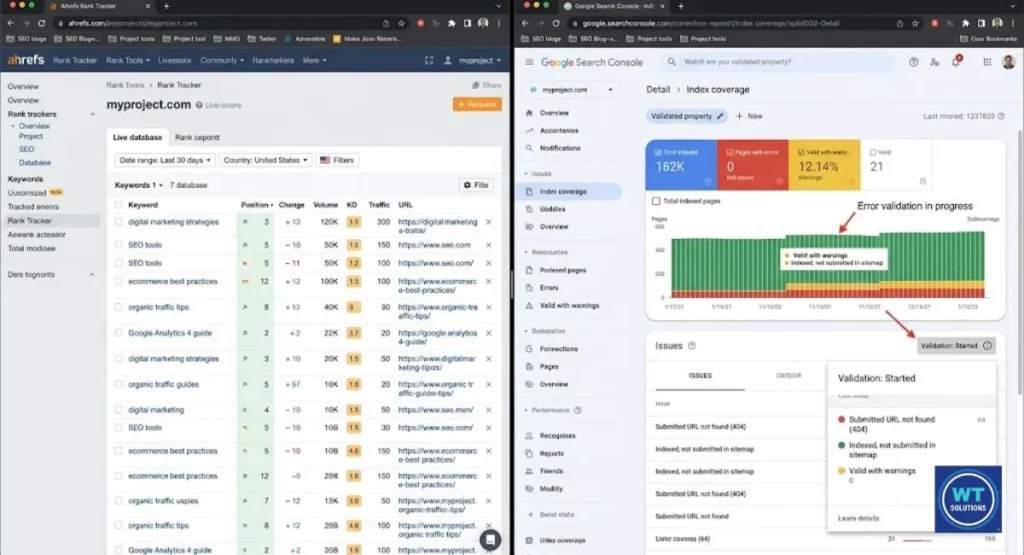
Digital marketers utilize a diverse ecosystem of tracking platforms, keyword crawlers, and AI engines to automate administration and measure consumer habits. Modern digital marketing requires a diverse toolkit of specialized software programs to measure user actions, check site health, and complete projects.
Analytics & Tracking (Used Daily)
Analytics and tracking software records behavioral web events to provide clear transparency on how visitors interact with an enterprise funnel. Advanced practitioners look at analytics platforms daily to review GA4 exploration streams, monitor custom JavaScript events, and debug conversion tracking setups.
This real-world analysis removes guesswork from web management, allowing teams to optimize pages based on actual human interactions rather than gut feelings.
SEO Tools (Used Daily for SEO Roles)
SEO tools crawl website infrastructures and evaluate backlink profiles to help specialists expand organic search visibility. Professional suites like Ahrefs, Semrush, and Screaming Frog are deployed daily to trace organic keyword performance, uncover structural site defects, and run complete link audits.
These tools allow marketers to pinpoint exactly how algorithms view a domain and where content modifications are required to retain high ranks.
AI Tools (Increasingly Used Daily in 2026)
AI tools process vast semantic datasets and assist marketing teams with programmatic outlining, code generation, and rapid data cleansing. Marketers leverage advanced generative models to structure deep article briefs, analyze lengthy customer feedback sheets, and clean raw tracking lists.
By automating repetitive formatting and technical tasks, these tools allow specialists to allocate more energy toward high-level strategy and empirical testing.
How This Role Interacts With Other Teams or Stakeholders
A digital marketer serves as a critical strategic hub linking web development, sales infrastructure, and executive leadership through clear performance reporting. They use clear data files to explain how web updates help the company reach its long-term financial milestones.
In a normal workweek, a marketer meets with web designers to make online cart pages easier to use on mobile devices. They talk with customer care agents to discover common buyer complaints, converting those real concerns into helpful article topics.
They also provide transparent financial reports to business executives to show how digital marketing grows profits.
When a growing company realizes that its internal team cannot handle the workload, corporate leaders must learn “how to choose a digital marketing agency” that fits their industry needs.
The digital marketer assists by preparing specific “questions to ask a digital marketing agency” before any contract gets signed. They help executives evaluate vendor capabilities, analyze past results, and discover “how to hire a digital marketing agency” that uses ethical practices to build sustainable web traffic.
Different Roles, Different Days
The professional environment of a marketer is dictated by their business ecosystem, varying heavily across corporate internal positions, client-facing agency roles, and freelance operations.
The day-to-day work environment of an internet promotion expert changes significantly based on whether they work in-house for one business, inside an agency, or as an independent freelancer.
In-House Digital Marketer (Working for One Company)
An in-house digital marketer operates within a singular corporation to dedicate all optimization efforts toward expanding one exclusive brand footprint. Because they work deeply with a single product catalog, they build an extensive understanding of their unique consumer base.
Their schedule remains highly stable, allowing them to focus heavily on long-term data tracking and gradual web asset optimization.
Agency Digital Marketer (Managing Multiple Clients)
An agency digital marketer manages multi-channel digital acquisition funnels for a diversified portfolio of external enterprise clients simultaneously. This dynamic environment demands rapid contextual switching, as specialists routinely jump between entirely distinct industries over a single shift.
To understand how an agency handles this workload, a business owner can study “what is a digital marketing agency” to see how separate teams divide specialized tasks.
Agency professionals rely on real-world proof to show new clients that their systems work. They regularly write a comprehensive “digital marketing agency case study” that highlights how they solved a specific company’s traffic problems, lowered ad costs, and increased sales.
These data sheets prove to corporate prospects that the agency can deliver a high return on investment.
Freelance Digital Marketer (Self-Employed)
A freelance digital marketer acts as an independent sole proprietor who secures personal contracts, manages execution, and runs all business administrative functions.
Their routine is divided between completing technical client campaigns and handling private back-office tasks like sending balance invoices and managing lead generation. This path offers supreme lifestyle flexibility but introduces the challenge of balancing uneven income cycles.
Daily Challenges & How to Overcome Them
Digital marketing contains persistent operational challenges, including continuous network pings, search updates, and creative exhaustion. These challenges require practical solutions to keep campaigns running smoothly.
Challenge 1: Staying Focused with Constant Interruptions
Staying focused with constant interruptions is a pervasive operational obstacle caused by continuous communication pings and unexpected client requests.
Because marketers work on open communication networks, their days are filled with constant chat pings, browser alerts, and client emails that break up deep thinking.
- How to overcome it: Successful workers schedule explicit focus blocks on their calendars for creative content production and deep data analysis. They close out all communication software during these periods and answer accumulated text messages only at fixed times.
Challenge 2: Keeping Up with Platform Changes
Keeping up with platform changes requires constant learning because search engines and social apps modify ranking models without warning. Search applications and social media platforms alter their underlying ranking algorithms constantly, which can cause a high-performing strategy to stop working without warning.
- How to overcome it: Marketers spend 15 minutes every morning checking trusted industry news resources to stay ahead of upcoming system shifts. They test new updates on a small budget first before shifting a company’s entire marketing direction.
Challenge 3: Managing Changing Client Demands
Managing changing client demands requires enforcing structured communication parameters so stakeholders remain aligned on realistic campaign timelines. Clients often want instant traffic increases and may push for sudden strategy changes that disrupt long-term content and optimization schedules.
- How to overcome it: Specialists set firm project boundaries during the initial contract setup meetings. They share historical data to show clients that building an organic presence requires steady consistency over time rather than chaotic strategy shifts.
Challenge 4: Dealing with Technical Data Errors
Dealing with technical data errors involves building real-time alert systems to immediately identify broken web tags and script anomalies. Data tracking codes can break unexpectedly during routine website updates, causing a marketer to lose track of valuable consumer conversion data.
- How to overcome it: Marketers build automated custom alert rules within their analytics software to send an immediate notification if visitor recording drops to zero. They also run manual checkout checks every week to confirm purchase tracking works perfectly.
Challenge 5: Creative Burnout
Creative burnout occurs when daily copywriting demands exhaust conceptual energy, which can be mitigated by pulling direct ideas from search query intent. Developing fresh promotional copy, interesting media concepts, and deep informational articles every day can exhaust an individual’s creative energy.
- How to overcome it: Professionals use search data trends instead of waiting around for random creative ideas. They check the exact queries consumers enter online and use those proven terms to build their content structures.
Is Digital Marketing a Stressful Job?
Yes, digital marketing is inherently stressful due to the continuous transparency of campaign performance and direct accountability for corporate ad budgets. When traffic numbers drop or advertising costs increase unexpectedly, business management spots the negative change immediately on their executive screens.
However, this daily stress is highly manageable for individuals who love data analysis and creative problem-solving. Because every single action is trackable, a marketer can easily prove their business value by showing clear data charts that connect rising search visibility with increased company sales.
FAQs
What is a digital marketing campaign?
A digital marketing campaign is a multi-channel promotional strategy designed to achieve a specific business objective within a defined timeframe. It integrates search ads, blogs, and targeted emails to drive conversions. Marketers continuously analyze live performance data to ensure the revenue generated outweighs the overall advertising spend.
How Many Hours a Day Does a Digital Marketer Work?
A standard digital marketer works an average of 8 hours per day, totaling a conventional 40-hour workweek. These hours can fluctuate slightly during seasonal sales, major product rollouts, or when onboarding new clients. Business owners should clarify exact hourly expectations with their teams before signing service contracts.
What is the typical day of a digital marketer?
The typical day balances morning analytics audits with afternoon creative blocks focused on campaign optimization and content production. They start by checking GA4 data streams and tracking pixels to catch sudden performance dips. The rest of the shift is spent writing copy, setting up email workflows, and collaborating with developers.
Is digital marketing a difficult job?
Yes, it can be challenging because it requires balancing technical data configuration with creative problem-solving under constant algorithm changes. Practitioners must maintain high analytical focus to manage ad budgets while avoiding burnout from creative writing demands. However, the role becomes highly manageable with structured technical workflows.
Do digital marketers make a lot of money?
Digital marketers earn competitive salaries, with mid-level specialists averaging $68,000 to $85,000 and senior managers crossing $140,000 annually. Compensation stays high because modern enterprise survival depends directly on digital traffic acquisition and revenue generation. Actual earnings scale rapidly based on specialization and location.
Is a digital marketer a good career?
Yes, it is an excellent career choice offering strong financial security, high remote flexibility, and clear paths for professional growth. It perfectly suits individuals who enjoy analyzing human behavior, testing fresh software, and driving business results. The field rewards continuous self-learning, allowing fast promotion.
Are digital marketers in high demand?
Yes, digital marketers remain in high demand as global businesses continuously migrate their commercial operations toward online channels. Companies require specialized experts to navigate advanced AI search models, manage programmatic ad auctions, and protect organic visibility. This creates massive, long-term job security.
Summary: Is This Daily Routine Right for You?
The daily routine of a digital marketer requires an agile balance of technical analytics, code optimization, and high-quality content production.
If you enjoy studying user habits, learning new software programs, and writing clear answers to consumer questions, this career choice offers an exciting and financially secure path for your future.