Small businesses need smart marketing to find local customers, increase sales, and beat larger competitors. This comprehensive guide details 9 Marketing Strategies for Small Businesses to help you promote your company without spending a fortune.
Choosing the right digital marketing tactics can feel overwhelming when you have limited time and a tight budget. However, implementing a clear inbound marketing plan allows you to attract highly interested buyers naturally.
By focusing your efforts on proven local SEO techniques and neighborhood partnerships, you can maximize your visibility where it matters most. Read on to discover how these marketing strategies can transform your small business and build lasting trust in your community today.
Why Does Digital Marketing Matter for Small Business Owners?
Digital marketing matters for small business owners because it allows you to connect directly with local consumers who use conversational voice commands and internet-connected devices to find nearby services instantly.
It replaces expensive, unmeasurable traditional advertising with affordable online strategies that prove exactly where your money goes.
To understand the core concept, we must answer a simple question: What is digital marketing? It is the practice of promoting products or services through internet-connected devices, including search engines, social media platforms, email, and websites.
Understanding why digital marketing is important for small businesses helps you make better decisions with your company budget.
In 2026, more than 80% of local consumers search online before buying from a nearby shop. However, modern search behavior has shifted completely. Instead of typing short, fragmented keywords into a blank text box, customers now speak naturally to their devices.
They ask long-tail, highly conversational questions such as: “Where is an affordable, highly-rated plumber near me who can fix a broken pipe tonight?” If your business web pages do not speak the same natural language that your customers use in real life, modern search systems will fail to find your shop.
When you look at your growth options, you will find massive advantages of digital advertising over old marketing styles. Traditional print, billboard, or radio ads cost a lot of upfront money, and you cannot measure how many people see them. Online options let you target specific zip codes, ages, and customer behaviors. This means your budget goes only toward people who genuinely need your help.
To help you see the big picture, consider these 10 benefits of digital marketing for growing companies:
- Affordable Entry Cost: You can start your campaigns with just a few dollars a day.
- Exact Performance Tracking: You can view real-time data showing clicks, calls, and purchases.
- Hyper-Local Focus: You can show your ads exclusively to neighbors within walking distance of your storefront.
- Level Playing Field: A well-built website allows a small family shop to look just as professional as a multi-million dollar corporation.
- Continuous Lead Collection: Your web presence works twenty-four hours a day to gather customer messages while you sleep.
- Enhanced Brand Familiarity: Regular online updates help community members remember your name first.
- Stronger Customer Trust: Genuine online reviews and helpful tips prove that you are an expert in your trade.
- High Return on Investment: You waste less money on disinterested audiences, which protects your cash flow.
- Direct Mobile Access: Your business lands right in the palm of your customer’s hand via their smartphone.
- Instant Updates: You can fix errors or adjust text on an internet ad within seconds.
However, you must also prepare for specific challenges with digital marketing. The internet marketplace changes constantly, meaning your business must adapt to shifting platform rules and layout updates.
Additionally, managing multiple platforms requires steady time and effort, which can overwhelm a busy owner. By focusing on a few select tactics, you can bypass these hurdles and keep your business growing smoothly.
Step 1: Know Exactly Who Is Your Customer
Knowing your customer means identifying the exact group of people who face the specific problem your business is uniquely qualified to solve. You cannot sell your services to everyone, so you must target a defined group of local buyers to protect your budget.
Start this process by analyzing your current best clients. Look at their ages, their jobs, their average income, and the main reasons they buy from you.
For example, a local pet groomer should not spend money advertising to every animal lover in the state. Instead, they must focus on busy pet owners who live within a five-mile radius of the shop and need evening appointments.
Once you gather this information, create a written profile of your ideal buyer. Use this profile to guide all your messaging. When you speak directly to one person’s needs, your words sound natural and trustworthy. This stops you from wasting ad dollars on people who will never walk through your front doors.
Step 2: Set SMART Goals, Not Vague Intentions
Setting SMART goals means establishing precise, measurable milestones for your business campaigns instead of using broad, unprovable statements. Setting clear milestones gives your business a roadmap and shows you exactly which tactics generate profit.
The best way to organize your business objectives is to use the SMART framework. This acronym stands for Specific, Measurable, Achievable, Relevant, and Time-bound. When you apply this structure, you eliminate guesswork and keep your team focused on clear tasks.
| Marketing Metric | Vague Intention | Expanded SMART Goal |
| Website Visitor Growth | I want more people to visit my website this year. | Our website will gain 500 new local visitors every month by publishing weekly helpful articles. |
| Local Social Media | I want to get more followers on our social profile. | Our page will gain 50 new local followers on Instagram each week by posting video tips. |
| Lead Generation | I need more people to sign up for our newsletter. | Our business will collect 30 new email addresses this month by offering a ten percent discount coupon. |
| Customer Feedback | We need to get more online customer reviews. | Our team will secure 15 new five-star reviews on our business profile this quarter by asking clients post-purchase. |

Review these goals at the end of every week. If you miss your target, you can change your strategy quickly. If you hit your target, you can increase your goals to expand your business further.
9 Effective Small Business Digital Marketing Tactics
Implementing the right combination of online tactics will build your local reputation and create a steady stream of new customers. These nine modern strategies work together to maximize your market presence.
1. Optimize Your Google Business Profile
Optimizing your Google Business Profile means completely filling out your free map listing to place your storefront directly in front of nearby searchers. It acts as your digital front door, displaying your hours, location, and contact options instantly.
- Claim Your Space: Visit the official business registration portal and complete the verification process for your physical address.
- Provide Exact Data: Keep your operating hours perfectly accurate, especially during holidays or seasonal changes.
- Add Professional Media: Upload crisp photos of your team, your lobby, and completed projects to show you run a clean operation.
- Write an Honest Summary: Use your business description to explain your specialties and mention the neighborhoods you serve.
2. Leverage Customer Reviews
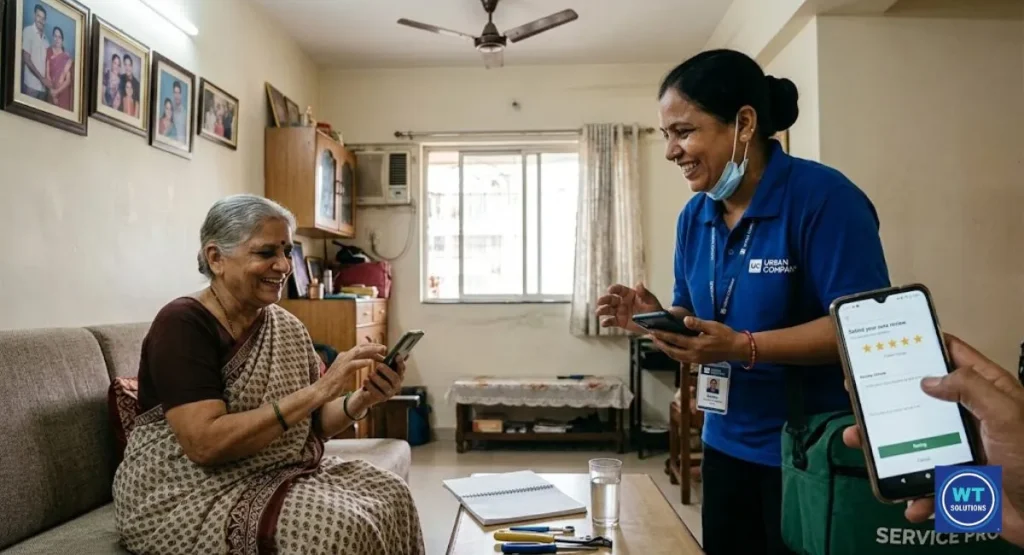
Leveraging customer reviews means gathering authentic, text-heavy feedback from real clients to satisfy modern consumer screening habits. Online customer reviews serve as digital recommendations that build immediate trust with consumers who discover your brand online.
Recent 2026 consumer behavior studies show that modern buyers now use advanced online tools to scan and filter out fake, automated reviews instantly.
Because technology easily catches generic or purchased feedback, having detailed, honest text reviews written by real human hands is completely mandatory to build trust. Buyers look for real stories about how your business solved a problem, how your staff acted, and whether your prices match your estimates.
To build a flawless reputation, ask your clients for detailed feedback immediately after a job. Request reviews right after a successful sale or service completion when the customer is happiest.
Simplify the task by sending a direct text message or email containing a short link straight to your review platform. Always reply politely to every single review, thanking happy clients and offering genuine solutions to unhappy ones. Finally, print your top web reviews on your physical brochures or place them on the homepage of your website.
3. Implement Local SEO
Implementing local SEO means structuring your website content so modern conversational search systems can easily find your business during voice interactions. Local search optimization ensures your business website appears at the top of the page when nearby neighbors search for your specific services.
Modern buyers rarely type raw keywords into web browsers anymore. Instead, they activate voice assistants on their phones or dashboards and state complex queries like: “Where is a family-owned auto shop near downtown that fixes foreign brakes quickly?” To capture these valuable leads, your website content must match the natural cadence of human speech.
Start by adding long-tail conversational questions and answers to your web layout. Insert your city and neighborhood names naturally into your website titles and text blocks. Clean up your web design so pages load fast and read clearly on small mobile screens.
Keep your business name, address, and phone number exactly identical across every web directory. Finally, design dedicated pages that solve specific local problems, like dealing with local weather damage or city building rules.
4. Build a Targeted Social Media Presence
Building a targeted social media presence means focusing your limited marketing hours exclusively on the specific platforms where your local buyers congregate. You do not need to manage a profile on every social media platform to succeed.
- Select Wisely: Use professional networks like LinkedIn for business services, or visual apps like Instagram for retail, food, and beauty.
- Share Practical Tips: Publish short video guides that teach your viewers how to solve basic household or business issues.
- Interact Constantly: Treat social media like a telephone line by replying to every comment and message within a few hours.
- Show Human Elements: Introduce your employees and share your community volunteer work to build deep local connections.
5. Launch Email Campaigns
Launching email campaigns means building a direct communication system with your audience using customer data that they share with you completely voluntarily. Email campaigns allow you to speak directly to your customers without paying for ad space or relying on changing social media algorithms.
Strict digital privacy laws in 2026 have made voluntary data collection your single most valuable business asset. Because third-party tracking cookies are gone and public web networks limit how you find users, you must rely on data given willingly by your audience.
This voluntary registration proves the customer wants to hear from you.
To build a clean subscriber list, place simple signup forms across your digital profiles. Offer incentives by giving website visitors a valuable item, like a free pricing checklist or a discount code, in exchange for their email. Maintain regular schedules by sending a helpful newsletter once a week to keep your business fresh in the minds of your audience. Keep layouts simple with short, clear text blocks and a single big button that leads readers to your booking page.
Finally, separate your subscribers into groups, such as new prospects and past buyers, to send them highly relevant offers.
6. Create Compelling Content
Creating compelling content means publishing free, highly practical articles that solve immediate consumer problems while naturally drawing prospects to your website. This strategy blends your expertise with search optimization to bring organic traffic directly to your website.
When you connect SEO and Inbound Marketing, you create a powerful system that attracts interested buyers naturally. Instead of interrupting people with cold phone calls or annoying pop-up ads, you publish high-quality blog posts that answer their specific questions.
For example, a local landscaping company can write an ultimate guide titled “How to protect your lawn during hot summer months.”
This content answers the exact problem the homeowner faces. As they read your free advice, they realize you possess deep knowledge of your craft. When they decide to hire a professional crew for a large project, they will bypass unknown brands and call your shop because you already proved your worth.
7. Form Local Partnerships

Forming local partnerships means building a formal, strategic alliance with non-competing businesses to share customer trust and marketing expenses. Working alongside other independent business owners allows you to expand your reach safely by sharing customer bases.
To execute this properly, you must understand what is a marketing partner. A marketing partner is a trusted, non-competing business owner who targets the exact same consumer profile as you and operates with an identical standard of customer care and professional experience.
A true partnership goes far deeper than simply leaving business cards on a checkout counter; it means linking your local reputations together because you both deliver exceptional, proven service.
[ Your Business ] <—> [ Marketing Partner ] = Shared Local Trust
(e.g., Painter) (e.g., Flooring Co)
For instance, a local home painter can establish a formal partnership with a neighborhood flooring company. When the painter finishes a job, they leave the flooring company’s brochure with the homeowner because they know the flooring team does flawless work.
In return, the flooring company recommends the painter to clients who are remodeling their homes. You can also host community charity drives together, share booth space at local festivals, or co-author neighborhood mailers to split advertising expenses.
8. Run Strategic Paid Ads
Running strategic paid ads means spending a controlled daily budget on search and social platforms to put your business in front of buyers instantly. Paid search and social advertisements provide an immediate boost in traffic while your organic community efforts gain traction over time.
- Target Search Intent: Use search ads to capture people typing urgent phrases like “emergency air repair near me” into their browsers.
- Target Demographics: Use social media ads to show your products to specific age groups or parents living in selected neighborhoods.
- Set Firm Boundaries: Control your expenses by setting a strict daily limit of five or ten dollars when you launch a new campaign.
- Test Visual Designs: Run two versions of the same ad with different pictures to see which one earns more customer clicks.
9. Launch a Loyalty or Referral Program
Launching a loyalty or referral program means designing an incentive system that rewards your past buyers for continuing to shop with you and recommending their friends. Rewarding your current clients for their continued business keeps your revenue steady and turns your customer base into a volunteer sales team.
- Create Simple Perks: Use a digital point system or a traditional paper card where a tenth visit earns a free service.
- Reward Referrals: Give a twenty-dollar credit to any current client who introduces a neighbor to your business.
- Celebrate Anniversaries: Send a special discount code during your customer’s birthday month to show you appreciate their loyalty.
- Provide Insider Access: Give your regular buyers early entry to new products or special sales before the general public hears about them.
Common Mistakes That Undermine Small Business Digital Marketing
The biggest mistake that undermines small business digital marketing is taking dishonest shortcuts, like purchasing fake interactions, instead of building genuine local trust. Many independent business owners make simple, avoidable mistakes that stall their online growth and waste their hard-earned money.
The most common operational error is attempting to manage too many platforms simultaneously. A business owner who tries to run five social media channels, film daily videos, write articles, and build ad campaigns all alone will quickly run out of time.
This leads to abandoned profiles, which makes your company look closed to outside browsers. It is far better to execute two tactics perfectly than to manage seven poorly.
Another massive issue is halting your campaigns too early. Building an organic presence takes a few months of steady effort before you notice consistent phone calls. Consistency is the secret to winning local search results.
Finally, some traditional owners hesitate because they wonder: Is digital marketing legit for small companies? The answer is a definitive yes, it is fully real and highly profitable, but only if you avoid shortcuts.
Some owners buy fake reviews or copy articles from other websites. Search engines discover these cheap tricks and remove dishonest sites from their results. Stick to honest, transparent methods that offer real value to human readers to build lasting local authority.
FAQs
What should small businesses do first, Invest in SEO or PPC?
Small businesses should invest in paid search ads (PPC) first if they need instant phone calls and immediate sales to survive today. However, they must start building their organic search presence (SEO) at the same time to secure free, long-term customer traffic. Combining both methods gives your company immediate revenue while lowering your overall advertising costs for the future.