To measure digital marketing success, you must track concrete performance indicators rather than rely on guesswork. In 2026, launching online campaigns without calculating your return on investment can quickly drain your corporate budget.
Real business growth happens when you set clear SMART goals, monitor your traffic sources, and identify which channels turn casual web visitors into paying customers. By implementing free tracking software like Google Analytics, you gain full visibility into your conversion rates and user behavior.
This structured data analysis helps you optimize your online ad spend and scale your brand equity, ensuring every marketing dollar you invest directly boosts your net profit.
What Are Digital Marketing Metrics?
Digital marketing metrics are the specific pieces of data that track, count, and report how users interact with your online marketing campaigns. These numbers show you exactly how many people see your content, click your links, or buy your items.
Think of these metrics as a complete health report for your business website and online ads. Instead of guessing if people enjoy your marketing, these numbers give you the absolute truth.
If you want to know what is a digital marketing agency and how they operate, their main job is to read and manage these exact numbers. A professional marketing team studies these data points to make sure your business does not waste money on campaigns that fail to connect with your customers.
Importance of Tracking Marketing Metrics
Tracking marketing metrics is important because it protects your business capital from being spent on ads and content that do not work. It gives you clear, undeniable facts that show you how to improve your website sales and grow your brand equity.
Running an online campaign without tracking your data is like driving a vehicle with your eyes closed. Monitoring your numbers gives your business massive advantages in the marketplace:
- Eliminates bad ad spend: You can quickly see which ads fail to bring in buyers and turn them off before you lose money.
- Improves customer satisfaction: You discover exactly what topics, products, and services your audience searches for the most.
- Boosts profit margins: You can locate broken pages on your website and fix them so more visitors become long-term buyers.
This regular tracking is also highly useful when you begin to learn how to choose a digital marketing agency. By knowing your own numbers, you can evaluate their proposals using real facts rather than vague promises.
Identify Your Campaign Goals & Objectives
To know if your online marketing is truly working, you must first write down the exact results you want your business to achieve. You cannot measure your success if you have not decided what success looks like for your campaign.
Many entrepreneurs make the mistake of posting content online without a clear destination in mind. They waste massive amounts of time and energy because they lack a core target. Before you write a single article or buy a single online ad, you must know your exact purpose. Decide if your business needs a boost in immediate product sales, more email subscribers, or simply more eyes on a new brand name.
Define Your Campaign Goals
To define your campaign goals properly, you must establish clear, specific, and realistic targets that are bound to a strict deadline. The most effective way to do this is by utilizing the SMART goal framework to guide your business planning.
Instead of choosing a vague goal such as “I want more website traffic,” you must create a concrete target. A strong example is: “I want to increase our website email signups by twenty percent over the next sixty days.” This gives your team a clear number to track and hit.
If you plan to hire outside help, you must establish these targets on day one. When you sit down to review questions to ask a digital marketing agency, always ask them how they plan to measure and achieve your specific SMART goals. This keeps everyone focused on the results that matter most to your wallet.
Top 15 Digital Marketing Metrics to Measure Performance

These fifteen digital marketing metrics are the most critical numbers you must watch to find out if your online business strategy is actually succeeding.
Before breaking down each metric in detail, you can use the structured comparison table below to quickly understand how these numbers function, what they measure, and the ideal target direction for your business in 2026.
| Metric Name | What It Measures | Core Business Benefit | 2026 Target Direction |
| Return on Investment | Overall financial profit | Proves business growth | Higher is better |
| Conversion Rate | Percentage of active visitors | Measures page design quality | Higher is better |
| Website Traffic | Total volume of web visitors | Tracks brand reach and size | Higher is better |
| Click-Through Rate | Percentage of link clicks | Tracks headline and ad appeal | Higher is better |
| Customer Acquisition Cost | Cost to win one new buyer | Keeps business expansion safe | Lower is better |
| Customer Lifetime Value | Total long-term customer spend | Tracks loyalty and worth | Higher is better |
| Cost Per Click | Price paid for one ad click | Measures ad budget efficiency | Lower is better |
| Bounce Rate | People leaving after one page | Locates slow or boring pages | Lower is better |
| Open Rate | Percentage of opened emails | Tracks subject line success | Higher is better |
| MQL | High-interest web leads | Tracks content marketing success | Higher is better |
| SQL | Ready-to-buy prospects | Measures sales funnel health | Higher is better |
| Return on Ad Spend | Gross revenue from ad costs | Measures specific ad success | Higher is better |
| Cost Per Acquisition | Cost for a specific user action | Tracks lead signup efficiency | Lower is better |
| Impressions | Total times content is displayed | Measures total brand views | Higher is better |
| Net Promoter Score | Customer loyalty and happiness | Tracks long-term satisfaction | Higher is better |
Return on Investment (ROI)
Return on investment measures the exact amount of net profit your business earns from a marketing campaign compared to the total money you spent on that campaign. It is the absolute king of business metrics because it proves whether your marketing makes money or loses money.
To find your ROI, take the total money made from a campaign, subtract the total campaign cost, and then divide that number by the campaign cost. In 2026, keeping a positive, healthy return is vital for long-term survival. If this number drops below zero, it means your marketing is losing money, and you must pause your campaigns to fix the issue immediately.
Conversion Rate (CVR)
Conversion rate is the specific percentage of website visitors who complete an action that you want them to take. This action can be anything from purchasing an item in your store to downloading an information sheet or filling out a contact form.
You calculate your CVR by dividing your total number of successful actions by the total number of website visitors, then multiplying that result by 100. For example, if 500 people visit your service page and 25 of them fill out your contact form, your conversion rate is exactly 5 percent. A high conversion rate shows that your website is easy to use, your writing is clear, and your offers are highly attractive to your readers.
Website Traffic
Website traffic is the total volume of individual users who visit your online platform within a specific window of time. It acts as an early indicator of your online brand size and shows how many people are discovering your business daily.
You must look at your traffic through different lenses by separating it into organic traffic from search engines and paid traffic from your online advertisements. Tracking these sources allows you to see exactly where your best visitors come from. A sudden, unexpected drop in your traffic is a clear warning sign that your search engine rankings have dropped or your online ad accounts have run into an error.
Click-Through Rate (CTR)
Click-through rate is the percentage of users who see your online link, search listing, or advertisement and actually click on it to visit your page. It measures how effectively your headlines and descriptions grab the attention of the general public.
To find your CTR, divide the total number of clicks your link receives by the total number of times people saw your link on their screen. If your link appears on a Google search results page 1,000 times and 50 people click it, your click-through rate is 5 percent. A low rate means your titles are either boring or do not match what users are actually trying to find online.
Customer Acquisition Cost (CAC)
Customer acquisition cost is the total amount of money your business must spend on marketing and sales efforts to win one single new paying customer. It tells you if your marketing campaigns are too expensive to sustain your business model over time.
You calculate this number by adding up all your marketing and sales costs for a specific month and dividing that sum by the number of new customers you gained during that same month.
If you spend 1,000 dollars on social media ads and secure 10 new clients, your acquisition cost is 100 dollars per customer. You must work constantly to keep this cost as low as possible to protect your business’s profit margins.
Customer Lifetime Value (CLV)
Customer lifetime value is the total amount of money a single customer is expected to spend at your business across their entire relationship with your brand. This number tells you exactly how much an individual client is worth to your company in the long run.
For example, if a client buys a 100 dollar service from your business every month for three years, their total lifetime value is 3,600 dollars. Once you know this number, you can easily decide how much money you can safely afford to spend to get a new customer. If your customer value is high, your business can comfortably survive a higher acquisition cost without going broke.
Cost Per Click (CPC)
Cost per click is the exact price your business pays to an advertising network every single time a web user clicks on one of your online advertisements. It is a fundamental metric for managing paid campaigns on search engines and social media networks.
Online ad platforms calculate this cost automatically based on market competition and the quality score of your ads. If many rival companies are trying to show ads to the same group of customers, your cost will rise. You must monitor this number daily to make sure your paid campaigns do not burn through your monthly budget before hitting your sales targets.
Bounce Rate
Bounce rate is the percentage of website visitors who land on one of your pages and leave your website completely without clicking any other links or taking any action. It shows whether your landing pages are engaging or if they turn people away immediately.
A high bounce rate is a strong sign that your page loads too slowly or that your content is confusing to the reader. To improve this number, you must ensure your pages open fast on mobile phones and give immediate, clear answers to the user’s initial question. Keeping visitors on your site longer increases your chances of turning them into buyers.
Open Rate
Open rate is the percentage of people who open an email that you sent out as part of a structured email marketing campaign. It measures how effective your subject lines are at cutting through the noise of a crowded inbox.
If you send a marketing update to 1,000 subscribers on your list and 250 of them open the message, your email open rate is 25 percent. If your open rate drops over time, it means your subject lines are missing the mark, or your messages are accidentally landing inside the user’s spam folder instead of their main inbox.
Marketing Qualified Leads (MQL)
A marketing qualified lead is a website visitor who shows a deep, deliberate interest in your business products or services based on their online behavior. These users are much more likely to become paying customers than a random web browser.
A classic example of this is a visitor who downloads a comprehensive industry guide or signs up for a free educational webinar on your website. They are not quite ready to hand over their credit card yet, but they want to learn from your brand. Tracking these leads tells you if your helpful content is attracting the right target market.
Sales Qualified Leads (SQL)
A sales-qualified lead is a prospective client who has been vetted by your marketing team and is completely ready for a direct sales conversation or phone call. These people have specific problems that your business can solve right now.
An excellent example is a user who visits your pricing page and fills out a form requesting a custom price quote or a live product demonstration. You must track how many visitors reach this critical stage every month. A rising number of these leads proves that your marketing campaigns are successfully finding serious, high-quality buyers.
Return on Ad Spend (ROAS)
Return on ad spend is a specific financial metric that measures the amount of gross revenue your business generates for every single dollar you invest into an online advertising campaign.
To find this number, divide your total revenue made from ads by the total cost of those exact ads. If you spend 200 dollars on search ads and pull in 1,000 dollars in direct sales, your return ratio is 5 to 1. Tracking this number allows you to see which specific ad graphics, headlines, or keywords generate the most profit for your store.
Cost Per Acquisition (CPA)
Cost per acquisition is the exact amount of money your business spends to get a user to complete a specific target action, such as signing up for a newsletter, downloading an app, or starting a free trial.
Unlike customer acquisition costs, which only track people who buy a product, this metric tracks any valuable action that moves a user deeper into your business system. Keeping this cost low ensures that your lead generation channels stay highly efficient and profitable over time.
Impressions
Impressions track the total number of times your online advertisement, social media post, or search engine link is displayed on a user’s screen.
This number does not tell you if people clicked on your link or liked your content, but it does show you the absolute maximum reach of your brand name. It is a fantastic metric to watch when you are launching a brand new product and want to build general public awareness in your local market.
Net Promoter Score (NPS)
Net promoter score is a metric that measures customer loyalty, happiness, and brand advocacy by asking your existing users how likely they are to recommend your business to a friend or coworker.
Customers answer this question using a simple scale from 0 to 10. Monitoring this number helps you see if your clients stay happy after they give you their money. Happy customers leave positive reviews, buy from you again, and recommend you to others, which naturally lowers your long-term marketing costs.
Understand Target Audience
To master your digital marketing numbers, you must spend time studying the specific groups of people who visit your website every day. Understanding your audience helps you understand exactly why your metrics shift up or down throughout the year.
You cannot rely on simple guesses to identify your ideal clients. You must gather hard, clear facts about their online reading and buying habits. When you analyze your target audience data, focus your energy on these three simple areas:
- User Demographics: Identify the average age, geographic location, and main language of your most active website visitors.
- Search Intent: Learn why they are looking for information online. Are they trying to solve a quick problem, or are they ready to buy a product right now?
- Device Preferences: Track whether your customers prefer using mobile smartphones or desktop computers to read your articles and browse your shop.
When you possess these facts, you can build much better pages that answer user problems instantly. If you do not have the time to track these habits yourself, you can learn how to hire a digital marketing agency to run these deep audience research reports for your business.
Tools for Tracking and Measuring Digital Marketing KPIs
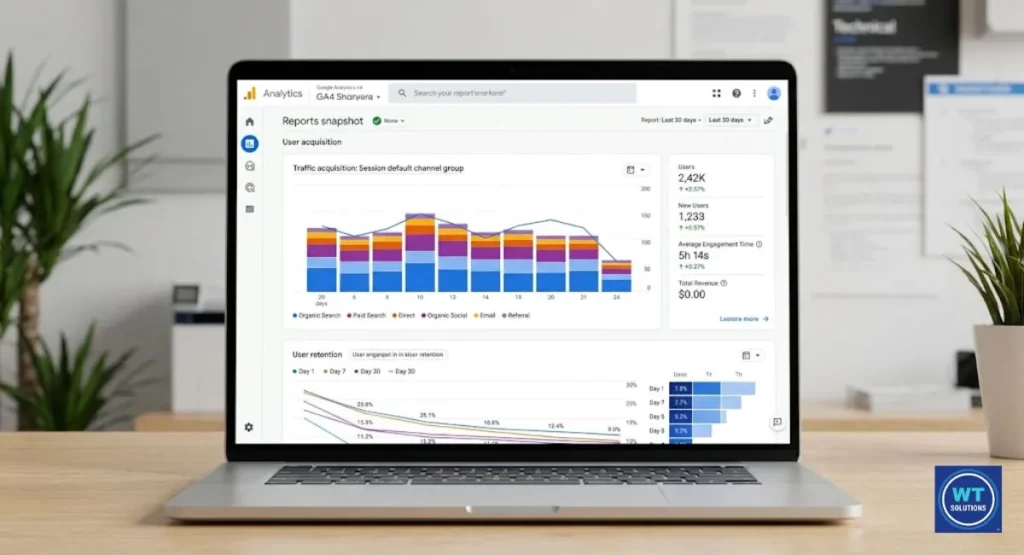
You do not have to calculate your digital marketing numbers by hand because free, professional software tools can monitor your website data automatically. Implementing these tools is the only way to secure clean, reliable reports for your business.
Google Analytics
Google Analytics is a free web software platform from Google that monitors, tracks, and reports your website traffic in real time. It shows you exactly how people find your business online, which specific pages they click on, and how long they stay to read your content.
This software is completely essential for checking your conversion rates and tracking your user paths. For example, it can show you if hundreds of users leave your site right when they hit your checkout page. By watching this data, you can fix broken forms and make your buying process smooth. It removes all the mystery from your website operations.
Google Search Console
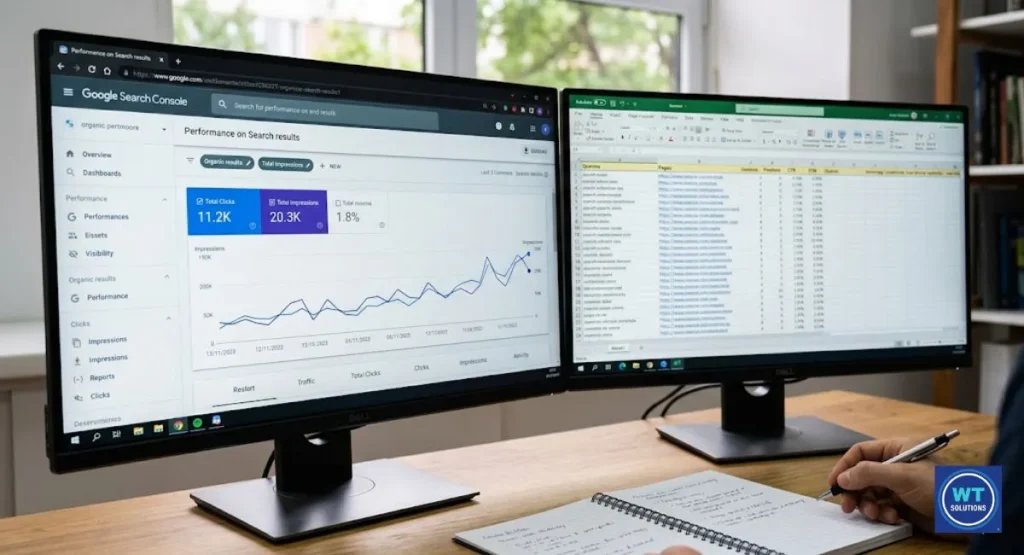
Google Search Console is a free dashboard from Google that helps you track, manage, and optimize your website’s visibility in organic search engine results. It shows you the exact words, questions, and phrases people type into Google before clicking on your brand.
This tool is incredibly useful for understanding why is seo important for business growth. It shows your average search position for every keyword, your link impressions, and how many search clicks you get every week. If you discover that your search impressions are deep but your clicks are low, you know you need to rewrite your titles to win more organic visitors.
Take Action on Your Digital Marketing Data
Gathering data is completely useless unless you use that fresh information to change your daily business operations and improve your campaigns. You must review your metrics weekly to eliminate costly mistakes and double down on your winning assets.
This continuous optimization is exactly what does a digital marketer do daily to keep a business profitable and ahead of the competition. They do not just stare at colorful charts; they use those charts to guide their physical steps.
If a report reveals that a social media ad is losing money, they kill it immediately. If it reveals that a specific blog article is drawing in massive numbers of high-quality leads, they instantly invest more time into creating similar content.
Adjust Your Strategy Based on Insights
To adjust your strategy like a seasoned professional, you must compare your current metrics against your past data to spot clear trends and market patterns. Use these historical insights to shift your marketing budget into the channels that yield the highest returns.
Let us look at a brief, real-world digital marketing agency case study to see how this works in practice. A local family business was spending 2,000 dollars a month on paid search ads, but noticed their customer acquisition costs were rising rapidly.
They studied their Google Analytics data and discovered that while their paid ads were failing, their free organic blog posts were bringing in eighty percent of their actual buyers.
Based on this clear insight, the business adjusted its strategy. They cut their paid ad spend in half and invested those savings into a professional search engine content plan.
Within ninety days, their website traffic grew by forty percent, and their total customer acquisition cost dropped by half. This simple story shows the immense power of taking action on real business data.
FAQs
How do you measure digital marketing success?
You measure digital marketing success by tracking clear business goals using metrics like return on investment, conversion rates, and customer costs. Comparing these performance numbers against your total marketing expenses shows you exactly if your online campaigns are making a profit.
Why are metrics important to digital marketing?
Metrics are important because they give you concrete facts about your website visitors instead of random guesses. They show you exactly where your budget goes, which advertisements work, and how to improve your website layout to secure more sales.
What are the four types of marketing effects?
The four types of marketing effects are awareness, engagement, conversion, and retention. Awareness introduces your brand to new eyes, engagement gets users to interact with your pages, conversion turns those browsers into buyers, and retention keeps them coming back to buy from you again.
Summary
Measuring your digital marketing success is the single most effective way to safeguard your corporate budget and guarantee predictable, long-term business growth. Instead of trying to watch every single number on the web, focus your time on the core metrics that directly influence your net profit.
Start by defining clear targets, using free tracking tools like Google Analytics, and monitoring your financial returns with strict discipline. When you base your daily business choices on clean, accurate data, you will naturally lower your customer costs, attract high-quality website visitors, and steadily grow your overall business revenue.