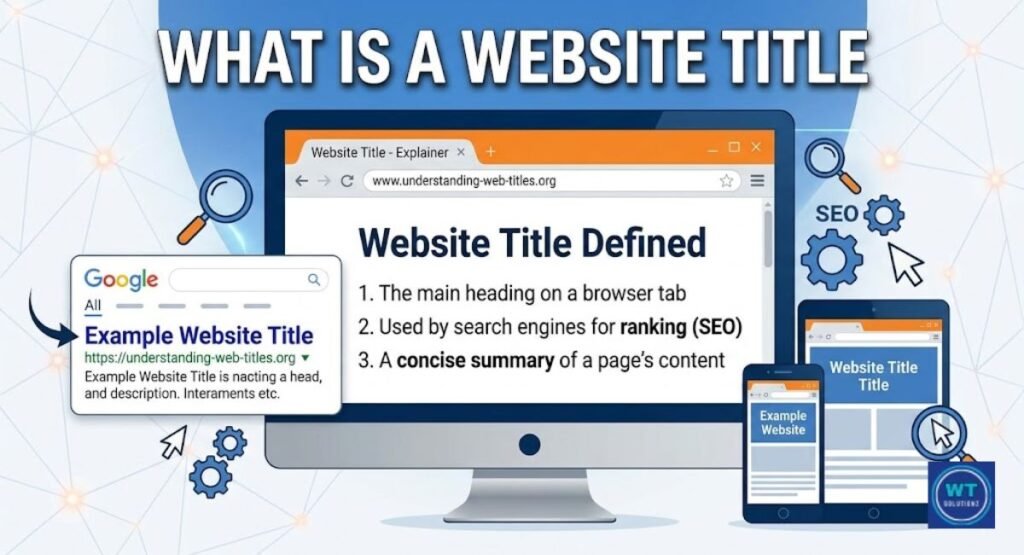
Your website title has the power to make or break your click-through rate because it is what search engines and visitors see initially. It needs a balance between creativity and SEO optimization to learn how to write memorable website titles. A captivating title draws in readers right away, conveys value effectively, and piques their interest. The correct title increases user engagement and promotes traffic, whether you’re writing headlines for blog posts, landing sites, or product pages. You can turn generic titles into effective magnets that draw clicks and entice readers to return by learning tried-and-true title writing strategies, such as the use of power words, numerals, and emotional triggers.
10 Rules for Writing a Catchy Title for the Web
These 10 guidelines determine whether your title receives a click or not. Creating captivating headlines doesn’t need guesswork. It is supported by an actual system. The top authors adhere to a set of guidelines that make their titles more effective for both search engines and readers. These ten guidelines will alter the way you write all of your titles going forward.
This is a realistic set of rules. Not a fluff. Not a single filler. Only the things that genuinely affect your Google Ranking, Click-through Rate (CTR), and website traffic. You’ll quickly see a noticeable improvement if you start employing even half of these.
1) A Title Must (Still) Be Descriptive
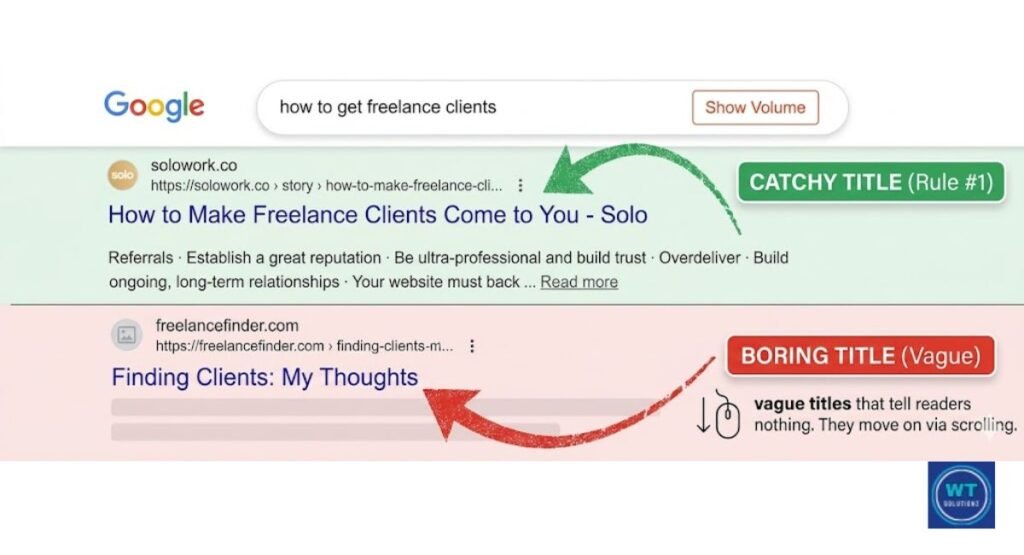
Descriptive titles retain readers, whereas vague ones lose them in less than a second. The topic of the article must be made clear in the title. It seems clear. However, you’d be shocked at how many titles don’t pass this easy criterion. “Some Thoughts on Marketing” is an example of a vague title that tells readers nothing. They move on via scrolling. Absent.
The hard work is done by descriptive headlines. They make expectations very clear. A reader should be able to predict what they will read as soon as they see your title. “How to Write Catchy Website Titles in 10 Simple Steps” makes this very evident. That is effective. Before the reader even clicks, a strong page title provides an answer.
“On average, 8 out of 10 people will read a headline, but only 2 out of 10 will read the rest.” Copyblogger
The statistics are indisputable. Your title holds 80% of the significance. Ensure it is impactful. Ensure it is descriptive. Ensure it is truthful.
2) Avoid Racy Titles
Clickbait may result in a click, but the reader always loses out. Racy titles and clickbait are ubiquitous. Do you recognize “You Won’t Believe What Happened Next!”? These titles are only effective once. Perhaps. However, they quickly erode trust. Additionally, trust is crucial in content marketing.
Curiosity is piqued by rape titles, but engagement metrics plummet. Readers click, feel duped, and leave right away. This lowers your bounce rate and lets Google know that your content isn’t worth ranking. Steer clear of shock value. Steer clear of hyperbole. Create titles that are both thrilling and truthful. It’s an uncommon combo. It prevails because of this.
3) Titles Must Function Independently
Even if you remove the page, picture, and context, your title must still be able to stand alone. Imagine your title floating by itself, devoid of any context, image, or article. Only the words. Does it still make sense? It’s superior. Because that’s precisely how your title appears in search inquiries, email previews, RSS feeds, and social media.
Here, contextual relevance is important. On its own, your title must convey a whole notion. “The Answer You’ve Been Waiting For” is meaningless without a topic, just as “Part Two” is meaningless without Part One. Write each headline as though it were the only thing your reader will ever see.
4) Think About the Length of Titles
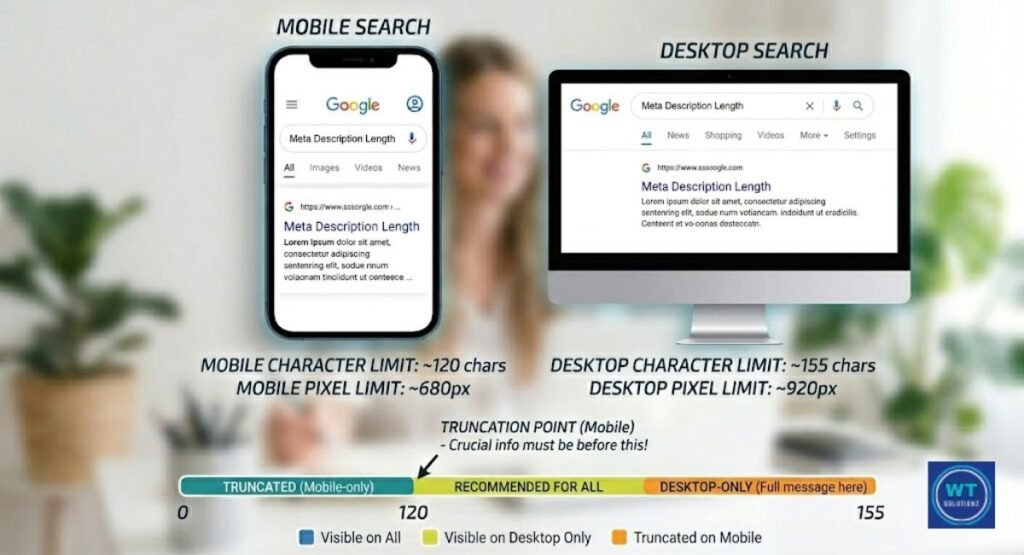
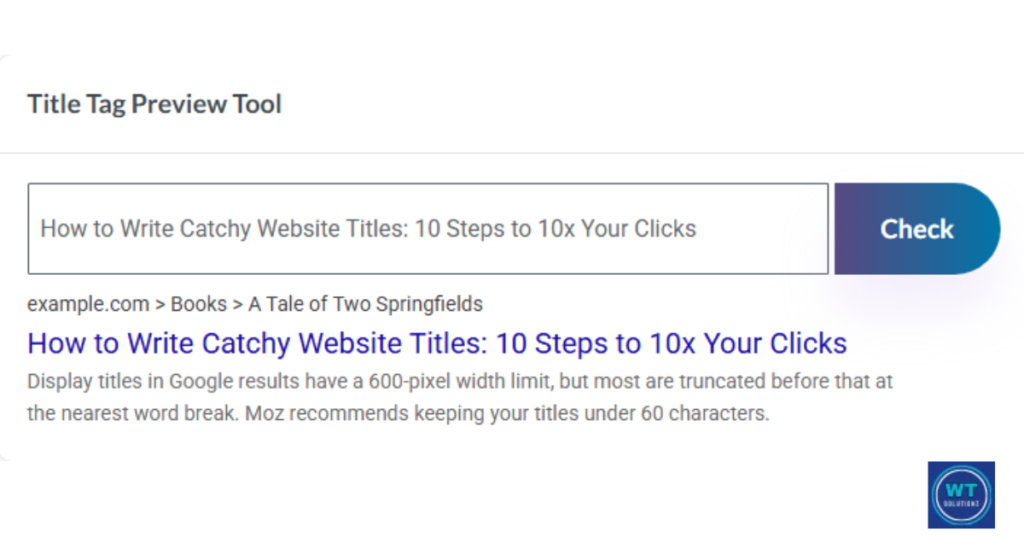
If your title is too long, Google will change it, and it won’t be to your liking. More than most people realize, title length is important. Overly long titles are removed by Google. Fifty to sixty characters is the ideal spot. Your character limit is that. Go over it, and Google will change your title, not in a way you’ll appreciate.
Just long enough to show everything. Enough to be descriptive. That’s the objective. Here’s a summary to have on hand:
| Title Length | Characters | What Happens |
| Too Short | Under 30 | Lacks description, misses keywords |
| Just Right | 50–60 | Displays fully in Google, clicks well |
| Too Long | Over 60 | Gets cut off, loses meaning |
Use a tool like Moz’s Title Tag Preview Tool to check your title length before publishing. It takes 10 seconds and saves you from making a costly mistake.
5) Don’t Promise Offers You Can’t Deliver
Your title is a contract, and contracts that are broken quickly erode credibility. A contract is your title. If you break it, readers won’t return. You’ve violated the agreement if your article’s headline is “The Complete Guide to Getting 100K Followers in 30 Days,” but it only touches the surface. Your content must align with user intent, or what your reader truly requires.
This is a value proposition problem as well. Value is promised by your title. It must be delivered by your content. That’s the situation. The quickest way to destroy your reputation and drastically lower your lead conversion rates is to overpromise. Honor your commitment. Every single time.
6) Be Concise
There is no middle ground; every word in your title either deserves its place or is a waste of space. Often, shorter equals stronger. Each word in your title ought to have a purpose. Use six words instead of twelve if you can. Being concise does not equate to laziness. It’s about honoring the time and focus of your readers.
Remove terms like “really,” “very,” “just,” and “actually” from your titles. They lengthen things without making them more meaningful. Examine the differences between “How You Can Really Start to Actually Write Better Blog Titles Today” and “How to Write Better Blog Titles Today.” The winner is the second one. Every single time. It takes skill to trim. Put it into practice.
7) Watch What Works and Repeat Your Successes
Studying the titles that have already worked for you is the quickest approach to writing better ones. Astute authors keep tabs on their titles. They examine which ones receive clicks and which ones don’t. They then do more of what is effective. It’s not dishonest. That’s effective content marketing.
To find out which compelling page titles receive the most impressions and clicks, use tools like Google Search Console. Seek out trends. Do your “how-to” titles perform better than your question-based ones? Are single-topic titles inferior to numbered lists? The best resources for monitoring title performance are as follows:
| Tool | What It Does |
| Google Search Console | Shows impressions, clicks, and CTR per title |
| Ahrefs | Tracks keyword rankings and click data |
| BuzzSumo | Shows which headlines get shared most on social |
| CoSchedule Headline Analyzer | Scores your title and suggests improvements |
Find your formula. Repeat it. Refine it.
8) Add Keywords to Your Titles
It’s that easy: Google doesn’t know what your page is about if your focus keyword isn’t in the title. Your title is the first step in Search Engine Optimization (SEO). Google is unaware of the topic of your page if your focus keyword phrase is not included in the title. It’s that easy. Place your primary keyword close to the title’s beginning. Avoid burying it at the end.
Here’s the thing, though: avoid stuffing it. It’s best to use your keyword in one clear, organic way rather than three uncomfortable ones. Ahrefs, SEMrush, and Google Keyword Planner are examples of keyword research tools that assist you in identifying the precise terms that members of your target audience actually type into searches. Make use of those terms. Of course. in a strategic manner.
9) Don’t Be Afraid of Lists

A number in your headline gives a promise a tangible quality that no adjective can. List titles are effective. Forget about it. “10 Rules for Writing a Catchy Title” explains what to expect. a figure. a subject. A pledge. List titles are trusted by readers because they convey ease and organization. A wall of text is not something anyone wants to navigate. Clarity is promised by list titles.
There is a psychological component to this. Titles are made solid by numbers. They establish standards. It is easier to click on “7 Ways to Boost Your Click-through Rate (CTR)” than “Ways to Boost Your CTR.” In click tests, odd numbers like 7, 9, and 11 typically perform better than even numbers. Make use of them. They are productive.
10) Make It Collaborative
In any title, “you” is the most powerful word; therefore, utilize it. The most effective click-worthy headers address the reader directly. They employ terms like “you,” “your,” “we,” and “us.” They don’t feel like lectures, but rather conversations. When copywriting is done well, it speaks WITH people rather than AT them.”How YOU Can Write Catchy Website Titles Today” addresses the same subject in a different way than.
“How to Write Catchy Website Titles.” distinct vigor. The tone of cooperation fosters bonding right away. Clicks are also driven by connection. Feel the difference for yourself when you apply it to your next title.
Blog Post Titles: 5 Expert Tips on How to Make Them Catchy
Two seconds. Your blog title only has that much time to convert an unfamiliar person into a reader. First impressions are crucial when it comes to blog titles. You have roughly two seconds to persuade a stranger to click on your link instead of everyone else’s. Two seconds. It’s not much time. But it’s sufficient if you take the proper attitude.
These five pointers are what make a blog title stand out from one that receives thousands of clicks. When you combine them, your titles will get more powerful each week. The title is where inbound marketing success begins.
1. Know Your Target Audience
Writing for everyone entails knowing precisely who your title is addressing and connecting with no one. Know your audience before you write a single word. A 55-year-old small business owner using Google Ads won’t find a title that appeals to a 22-year-old freelance content author. Your language, tone, and promise are shaped by your intended audience.
Direct language is best, especially for readers in the United States. Get right to the point. Titles that offer a definite benefit quickly elicit a response from Americans. Do some research. Recognize their suffering. Understand their objectives. Next, come up with a title that directly addresses those needs. Every outstanding title is guided by its user intent.
2. Use Compelling Words in Your Blog Headline
Your clicks can be doubled overnight with the correct word in the right spot. Certain words captivate readers. They are pushed away by others. In less than a second, compelling words elicit an emotional response. “Proven,” “Secret,” “Easy,” “Fast,” “Free,” and “Now” are examples of words that arouse interest and desire. They give folks the impression that they are going to learn something worthwhile.
But don’t go overboard. It is sufficient to use one or two strong words per title. Your title will sound desperate if you jam in five, and readers will sense this. The following are some tried-and-true catchphrases for blog titles that encourage clicks:
| Word Type | Examples |
| Urgency Words | Now, Today, Instantly, Fast |
| Benefit Words | Easy, Proven, Effective, Simple |
| Curiosity Words | Secret, Unknown, Surprising, Hidden |
| Authority Words | Expert, Ultimate, Complete, Definitive |
Pick one. Use it well. Move on.
3. Keep Your Blog Titles Short
A lengthy headline not only looks awful on a mobile screen, but it also turns off readers before they even get started. On smartphones, short titles are popular. Additionally, mobile devices currently account for approximately 63% of web traffic in the United States. Most readers won’t care if your title takes up two lines on a phone screen. The ideal length for blog titles is between six and ten words.
Additionally, short titles load more quickly in the brain. Sharing them on social media optimization sites like LinkedIn, Instagram, and Twitter is simpler. “Grow Your Freelance Business With AI Tools” is a catchy, concise, and memorable title. No one is overlooking that. Length is the first factor in readability, and shorter is nearly always preferable.
4. For In-Depth Blog Posts, Make Them Sound Epic
Don’t undervalue cornerstone content; instead, give it a label that conveys its scope. You have to go big sometimes. Epic-sounding titles are appropriate for complete tutorials, ultimate guides, and key content pieces. “Ultimate,” “Complete,” “Everything You Need to Know,” and “Master Guide” are examples of words that indicate depth. They inform readers that this is the real deal and not just a quick skim.
However, epic only succeeds when your content is compelling. “The Ultimate Guide to Writing Catchy Website Titles” provides more comprehensive coverage. Don’t refer to your 500-word article as an ultimate guide. Make sure your title and text are of the same size. The honest play is that. And in the long run, honesty always wins out over flash.
5. Optimise Your Headline for SEO
A fantastic title that no one discovers is one that Google is unable to read. Excellent titles and search engine optimization (SEO) go hand in hand. Place your target keyword phrase close to the beginning of your title. Make sure your title reflects the search terms that people actually use. Find out what people are searching for using keyword research tools like Ahrefs or SEMrush, then include those precise terms organically into your title.
Google shows the title of your page in search results. Make sure it reflects the true purpose of your page. Don’t use more than 60 characters. Prioritize human interaction over search engine optimization. A superb SEO title sounds like a real person responding to a real query rather than being robotic. That’s the recipe that works.
How To Write Catchy Titles And Headlines
If you choose your titles correctly, everything will go more smoothly down the road, including more clicks, improved ranks, and increased conversions. Your content’s headlines and titles serve as its access points. Everything else becomes simpler if you get them properly. Additional clicks. an improved Google ranking. increased conversion of leads. Professional copywriters employ the six techniques listed below on a daily basis. Study them. Put them into practice. Take possession of them.
These are not hypotheses. The top content teams at leading media firms and blogs in the United States employ these tried-and-true methods. These techniques apply to many types of writing, including blog posts, landing pages, and product descriptions.
01. Use Engaging Words that Communicate the Purpose of Your Article
Engaging words make it simple for readers to determine whether your title is worth their time. Using captivating language lets the reader know exactly what’s going to happen. “Learn,” “Discover,” “Fix,” “Avoid,” “Master,” and “Build” are examples of action-oriented words. Before the reader even clicks, they convey a clear advantage and goal. These words give descriptive headlines a sense of purpose and reliability.
Consider captivating words as markers. They direct your reader to a specific location. When your title reads, “Discover the Fastest Way to Write High-Converting Titles,” the reader is aware that they are going to learn something particular and helpful. It’s that lucidity that turns a browser into a reader.
Examples of Engaging Words Being Used in Titles and Headlines:
| Engaging Word | Title Example |
| Discover | Discover 7 AI Tools That Write Better Headlines Than You |
| Learn | Learn How to Build a Freelance SEO Business in 2026 |
| Fix | Fix These 5 On-Page SEO Mistakes Killing Your Rankings |
| Avoid | Avoid These AI Prompt Errors That Waste Your Time and Money |
| Master | Master Google’s 2026 Algorithm With These 9 Simple Tactics |
| Build | Build a Content Strategy That Drives Traffic on Autopilot |
02. Use Action-Prompting Trigger Words
Certain words grab the reader by the collar instead of extending an invitation. Trigger words compel readers to take action. They arouse interest, generate a sense of urgency, or appeal to a strong desire. Words like “Stop,” “Start,” “Finally,” “Warning,” “Attention,” and “Guaranteed” are powerful. They give readers the impression that they must read this. At this moment. Trigger words are the lifeblood of call to action (CTA) energy.
The most effective trigger words evoke strong feelings. “Because it instills anxiety, “Warning: These 5 Title Mistakes Are Killing Your Traffic” is clicked. Fear of being left out. fear of making expensive mistakes. It’s a strong emotional hook, but make good use of it. Always provide genuine, helpful stuff to support it.
Examples of Trigger Words Being Used in Titles and Headlines:
| Trigger Word | Title Example |
| Warning | Warning: These AI Writing Habits Are Tanking Your SEO Score |
| Finally | Finally: A Freelancer’s Guide to Pricing Your Services in 2026 |
| Stop | Stop Using Outdated SEO Tactics, Do This Instead |
| Attention | Attention Content Creators: Google’s New Rules Changed Everything |
| Guaranteed | The Guaranteed Way to Get Clients as a Freelance Writer in 2026 |
| Start | Start Using AI Tools Today to Double Your Content Output |
03. Use Numbers for Easy Reading and Clarity
A single number can turn an ambiguous pledge into a specific strategy. In titles, numbers have a magical effect. They give the abstract a tangible quality. “Some Tips on Writing Better Titles” seems ambiguous. “9 Tips on Writing Better Titles” seems like a strategy. Because numbers establish distinct expectations, your brain reacts to them. You are fully aware of what you will receive.
In the majority of split tests, odd numbers outperform even ones. In headline click experiments, 7, 9, 11, and 13 consistently outperform 6, 8, and 10. The specific reason is unknown. However, the information is reliable. Your Click-through Rate (CTR) will increase if you use odd numbers in your list-style, high-converting headlines.
Examples of Numbers Being Used in Titles and Headlines:
| Number Style | Title Example |
| Top List | 11 AI Tools Every Freelancer Needs to Succeed in 2026 |
| Step-Based | 7 Steps to Ranking on Google’s First Page With AI Content |
| Fact-Based | 9 SEO Facts That Will Change How You Write Blog Posts |
| Rules-Based | 5 Rules Every Digital Marketer Must Follow Right Now |
| Mistake-Based | 13 Freelancing Mistakes That Are Costing You, Clients in 2026 |
| Tip-Based | 7 Expert Tips to Improve Your Click-through Rate With AI |
04. Evoke Emotion in Your Reader
Half the work is already done by a title that evokes a feeling in the reader. Action is motivated by emotion. People click on titles that evoke strong emotions in them, such as curiosity, excitement, terror, or relief. There are neutral titles. Emotional titles reach out and grab people by the collar. This is demonstrated by engagement metrics. Bland headlines are frequently outperformed by emotive ones.
Curiosity, fear, excitement, and surprise are the four feelings that function best in titles. “The Surprising Truth About How AI Is Changing Content Marketing” appeals to interest, while “Are You Making These 7 Costly SEO Mistakes in 2026?” appeals to dread. You may create titles that feel alive by incorporating these feelings into your headline strategy.
05. Make a Promise: (That Your Article Delivers On)
Overpromising titles actively undermine trust, making them worse than poor ones. A promise is made by every outstanding title. Your value proposition is the statement, “Read this, and you’ll get something valuable.” The golden rule is that your content must consistently fulfill that promise. Always. There are no exceptions.
Writing your title last is the best course of action. Complete the article first. Next, come up with a title that sums up what you just made. In this manner, there is an assurance that the delivery will match the promise. It preserves your reputation, lowers your bounce rate, and fosters the kind of trust that converts new readers into devoted followers.
06. Ask a Question
A clever question title fully capitalizes on your brain’s innate desire to find solutions. Naturally, questions catch people’s attention. Your brain’s natural tendency is to look for solutions. Your mind instantly searches for the solution when a title poses a query, and clicking is the simplest way to do so. User Intent sits at the heart of question-based titles.
The most effective question titles address a genuine problem. “Is AI Content Hurting Your Google Rankings?” focuses on a particular concern. The question “Do You Know How to Write a Catchy Website Title?” tests the reader’s understanding. Instant engagement is produced by both. Both provide the impression that clicking is essential.
Examples of Questions Being Used in Titles and Headlines:
| Question Type | Title Example |
| Problem-Based | Is Your AI Content Strategy Hurting Your SEO in 2026? |
| Knowledge-Based | Do You Know Which SEO Tactics Actually Work This Year? |
| Curiosity-Based | What Happens to Your Traffic When You Use AI for Blog Titles? |
| Challenge-Based | Can You Land Freelance Clients Without a Portfolio in 2026? |
| Fear-Based | Is Your Headline Strategy Already Outdated for Google’s New AI? |
| Discovery-Based | What Do the Top-Ranking Blog Posts in 2026 Have in Common? |
Write a Great Title for Your Webpage
Your title is merely a guess if you don’t have three answers before you type a single word. The process of creating a compelling title for your website begins before you even type a word. What the page is about, who it is for, and what you want the reader to do after clicking are the first three things you need to know. Your title is merely a guess without those three responses. Effective copywriting always begins with a clear goal.
After determining your “what, who, and why,” write your title in at least five distinct ways. Not two. Not three. Five. Next, compare them to one another. Which one is the most truthful? Which one appeals to you the most? Which one is inside the 50–60 character limit? Select the most powerful one. Remove the remainder. That’s how it works.
Make It Descriptive Yet Concise
Although the terms “descriptive” and “concise” seem contradictory, they are really the most difficult to master when writing headlines. The most effective high-converting titles are succinct and descriptive. It seems contradictory. It isn’t. It’s an ability. If you choose your words properly, you may convey a lot with very little. Each word in your title needs to be significant. Cut it if it doesn’t support your weight.
Descriptive headlines don’t need to be lengthy. The phrase “Write Catchy Titles That Rank on Google” has seven words. It is evocative. It is succinct. It has a natural keyword and conveys a clear benefit. The formula is that. A title that is both descriptive and succinct will benefit readers and search engine optimization (SEO).
Make It Easy to Understand
You’ve already lost your reader if they need to read your title twice in order to comprehend it. Simple language prevails. Always. particularly with general audiences in the USA who seek direct, unambiguous communication and quickly skim content. You’ve already lost your reader if they need to read your title twice in order to comprehend it. Readability cannot be compromised.
Would a sixth grader comprehend your title? That would be an excellent test. If not, make it simpler. Replace long words with shorter ones. Use clear language instead of jargon. “Optimize Your Headline’s Linguistic Complexity” transforms into “Write Titles People Actually Understand.” The same concept. entirely distinct affect. In content marketing, the combination of simplicity and contextual relevance is unbeatable.
5 Big Reasons To Spend More Time On Your Titles And Headlines
The majority of bloggers devote less than 5% of their writing time to their titles, and their traffic figures reflect this. The majority of bloggers devote less than five percent of their writing time to the title. That is not correct. The most read section of your entire piece is the title. It establishes your Google Ranking, Click-through Rate (CTR), and total website traffic. Here are five indisputable reasons to start taking title writing more seriously right now.
Reason 1: Your CTR is determined by your titles. There is no reader if there is no click. A great piece might be ruined by a dull title.
Reason 2: Title relevance plays a role in Google’s ranking of pages. A direct SEO indication is your keyword phrase in the title.
Reason 3: The title is what drives social media shares. A catchy, shareable headline is the first step in social media optimization.
Reason 4: In less than two seconds, first impressions are formed. Your title only receives that amount of time.
Reason 5: A compelling title establishes reader expectations and fosters confidence. If you live up to those expectations, your lead conversion rates will gradually increase.
The Art Of Writing Catchy Titles And Headlines
Writing outstanding titles requires both instinct and data, and it’s not just a formula. Writing engaging headlines is both science and art. SEO, character restrictions, keyword placement, and keyword research tools are all covered by the scientific side. Emotion, rhythm, word choice, and intuition are all included in the art side. Both are necessary. When one is used alone, it results in titles that are either technically accurate but emotionally lifeless or emotionally vibrant yet unseen by search engines.
With practice, art improves. Every day, write a title. Save all of the catchy headlines you come across online in a swipe file. Examine the use of their titles by leading publishers such as HubSpot, BuzzFeed, and The New York Times. Look for trends. Take strategies—never content—but strategies. Your headline instincts become more acute with time. It now takes five minutes instead of twenty. And the outcomes continue to improve.
“The headline is the most important element of an ad. It must offer a promise to the reader of a believable benefit,” David Ogilvy
Write Better Titles for Your Blog Posts and Engage More Readers
Your entire traffic strategy may change as a result of a single title upgrade. More readers result from better titles. Increased readership translates into increased website traffic. Stronger inbound marketing outcomes and improved lead conversion are the effects of increased traffic. Six to ten carefully chosen words at the top of your page set off a chain reaction.
You might be surprised to learn how little separates a good title from a terrific one. Usually, it’s just a single word shift. “How to Write Titles” turns into “How to Write Catchy Website Titles That Get Clicked.” Same subject. much more powerful. There is a distinct advantage, a power word, and specificity. For the next five posts, put this into practice. You’ll notice the change right away.
See Also:
What is a Website Title
Where to Put the Title Tag in HTML
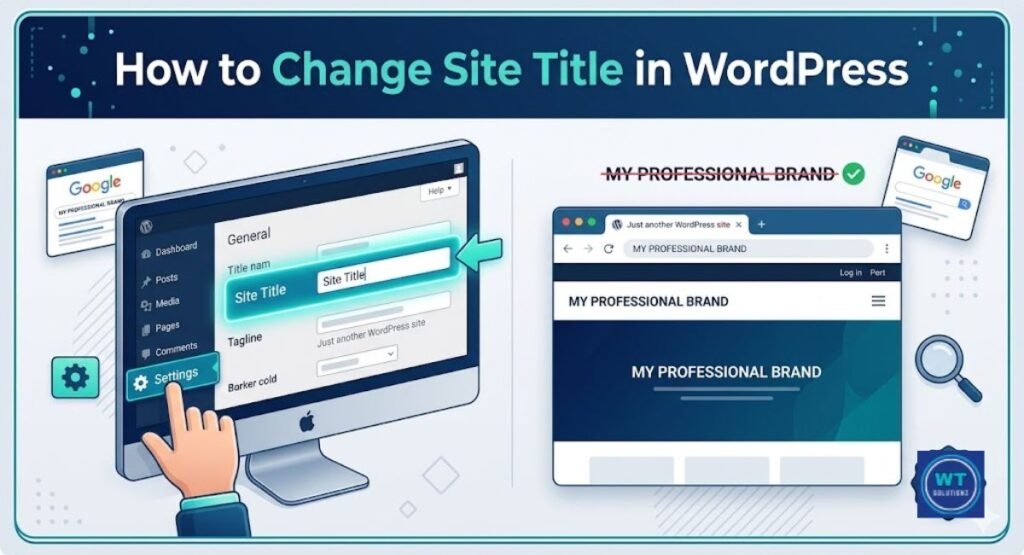
How to Change Website Title in WordPress
Final Thoughts
In the end, your title serves as the entryway to everything you produce. Before anyone can see what’s within, a weak door turns them away. They are quickly drawn in by a sturdy door, which makes them happy they came.
Don’t write just one title. Write five. Next, select the best. Make natural use of your keyword phrase. Don’t exceed the character limit. Address your target audience directly. Make a commitment that your material fulfills. Above all, never stop writing, testing, and improving.
Catchy website titles don’t just happen. One headline at a time, they are developed, tested, and improved. Go write a title that will entice readers to click.