Every day, millions of people search online for answers to their business challenges. If your brand does not appear in search results at that exact moment, you lose a potential customer to a competitor.
To win these buyers, you must combine two powerful digital strategies: search engine optimization and helpful content creation. Together, these methods form a unified approach known as SEO and Inbound Marketing. This master strategy helps you build a strong online presence by writing helpful content that answers user questions perfectly.
This complete guide will show you exactly how to grow your organic traffic, build real trust, and naturally turn website visitors into loyal, paying customers.
What Is Inbound SEO?
Inbound search engine optimization is an organic marketing method that uses targeted content to attract interested website visitors naturally when they look for answers to specific questions online.
How It Works in Practice

- User Intent: A user experiences a specific problem and types a query into a search engine.
- Organic Discovery: Your helpful, non-promotional article appears at the top of the organic results page.
- Trust Building: The user clicks your link, reads your expert solution, and immediately builds trust in your brand.
Why Is Inbound SEO so Valuable to a Brand’s Marketing Strategy?
Inbound search optimization is valuable because it lowers customer acquisition costs by creating permanent, high-ranking web content that generates free traffic long after paid ads stop running.
Core Business Value
- Compounding ROI: A single high-quality article can bring thousands of targeted visitors to your website for months or years without extra cost.
- Budget Efficiency: Traditional advertising requires you to pay constantly to keep your ads in front of people. When you stop paying for ads, your website traffic stops instantly.
- Brand Authority: Ranking at the top of search systems naturally makes your business look like the leading industry expert compared to paid competitors.
Breaking Down the Definitions: What Are SEO and Inbound Marketing?

To use this strategy well, you must first understand the two separate pieces that make it work. While they have different definitions, they work toward the same goal.
What Is Inbound Marketing?
Inbound marketing is a complete business framework that earns customer attention and loyalty by creating highly valuable, tailored content and digital experiences throughout the entire buying journey.
- Core Philosophy: Focuses on pull tactics rather than push tactics.
- Primary Channels: Blogs, email newsletters, social media communities, and interactive tools.
- Main Objective: Guides prospects smoothly through their buyer journey by being helpful, informative, and honest.
What Is SEO?
Search engine optimization is the technical and creative process of improving a website so that automated search engines can easily find, crawl, index, and rank its pages.
- Core Philosophy: Optimizing for both machine algorithms and human readers.
- Primary Channels: Google, Bing, and alternative conversational AI search engines.
- Main Objective: Make your website show up at the top of organic search results for industry terms.
Core Components of an SEO Strategy
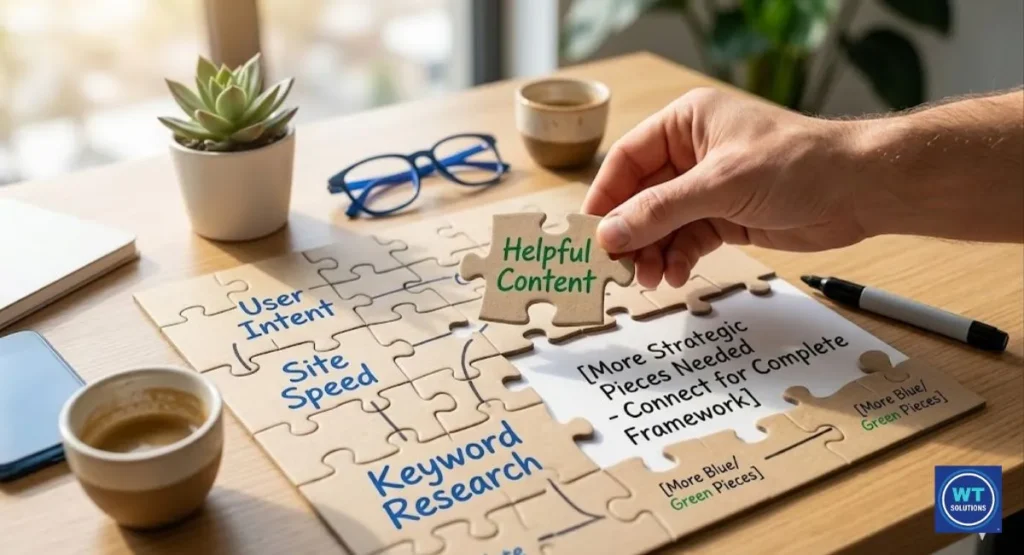
| Component | Main Execution Step | Operational Goal |
| Keyword Research | Identifying accurate human search phrases | Align content with user demand |
| On-Page Optimization | Organizing text with clear header tags and titles | Improve content readability for crawlers |
| Technical Health | Fixing broken links and maximizing page speed | Provide a fast, flawless user experience |
| Authority Building | Earning backlinks from external trusted sites | Prove domain reliability to algorithms |
Core Components of an Inbound Marketing Strategy
- Content Creation: Writing blogs, creating videos, and designing guides that solve user problems.
- Email Marketing: Sending helpful tips and product updates directly to people who signed up for your list.
- Social Media Engagement: Sharing insights and talking with your audience on platforms where they spend time.
- Lead Nurturing: Giving helpful resources to interested prospects until they are ready to make a purchase.
Inbound Marketing vs SEO – What’s the Difference?
Inbound marketing is the large digital ecosystem that manages the entire customer lifecycle, while search engine optimization is the specific engine that drives organic traffic into that ecosystem.
Comparison Framework
| Feature | Search Engine Optimization | Inbound Marketing |
| Primary Focus | Search engine rankings and organic traffic | Whole customer journey and conversions |
| Main Channels | Google, Bing, and other search engines | Blogs, email, social media, and landing pages |
| Success Metrics | Keyword positions, organic clicks, site speed | Email signups, customer retention, sales revenue |
Common Misconceptions: Is SEO Inbound Marketing?
Many business owners get confused about how these two concepts connect. Let us clear up the most common misunderstandings so you can plan your marketing properly.
Misconception: SEO is the same as inbound marketing.
- The Reality: This is false because search optimization is just one part of a complete inbound marketing strategy. While search optimization focuses mostly on search engines and website traffic, inbound marketing also includes social media, email campaigns, customer service, and sales alignment. It looks at what happens after a user leaves the search engine page.
Misconception: SEO alone can drive your inbound marketing efforts.
- The Reality: This is incorrect because getting a person to click on your website is only the first step. If your website has bad design, poor writing, or no clear way for users to buy from you, your search traffic will leave without spending any money. You need inbound systems like clear forms and email follow-ups to convert those visitors into customers.
Misconception: Inbound marketing doesn’t need SEO.
- The Reality: This is a dangerous mistake because, without search optimization, nobody will find your helpful content. You can write the best article in the world, but if it does not rank on search engines, it will sit silently on your website where no one can see it. You cannot build a relationship with a customer who does not know you exist.
How SEO and Inbound Marketing Work Together
These two strategies combine to form a cyclical marketing system where search optimization handles external visibility and inbound marketing handles internal user engagement.
Where Inbound Marketing and SEO Overlap
- User Centricity: Both strategies succeed by providing high-quality, trustworthy information that satisfies what the user wants.
- Simultaneous Execution: When you write content that answers search terms while also helping the user make a life decision, you are doing both strategies at the same time.
Optimized content supports user pain points
An effective strategy looks directly at user pain points, which are the specific problems or frustrations your customers face. By using search data to find out what people are searching for, you can write articles that directly solve those exact worries.
For instance, when B2B decision-makers realize they can’t handle all these digital channels alone, they often search for external help. They look up queries like what is a marketing partner to understand how a strategic agency alliance can scale their business. By addressing this intent directly, you transform your content from a simple blog post into a high-value trust builder.
SEO aligns content with User Intent
User intent is the true reason why someone types a phrase into a search engine. Sometimes they want to learn something, while other times they want to buy something. Search optimization helps you understand this intent so your inbound marketing content gives the exact type of information the user expects to see.
User experience optimization
Search engines prefer websites that are easy to use. Inbound marketing also requires a clean, pleasant website so visitors stay longer. When you improve your font sizes, simplify your menus, and remove annoying pop-up ads, you satisfy both search engine systems and human visitors.
Link-building and credibility
When you create amazing inbound content, other websites naturally want to link to it. These links act as digital votes of confidence. Search engines see these links and raise your rankings, which brings even more inbound traffic to your brand.
SEO in the Inbound Marketing Conversion Funnel

Search engine optimization guides buyers through the inbound funnel by matching informational intent at the top, educational resources in the middle, and transactional answers at the bottom.
Attract
In the attractive stage, your goal is to bring the right people to your website. You use informational articles to target broad, educational keywords. For example, a user might search what is digital marketing or why digital marketing is important for small businesses to understand the basics of the industry. By ranking for these terms, you introduce your brand to new people early in their journey.
Convert
Once visitors are on your site, you must convert them into leads. You do this by offering special, high-value resources like free e-books or templates. Search optimization helps by ensuring your landing pages are clear, fast, and easy to find if someone searches directly for your free tools.
By ranking for these terms, you introduce your brand to new people early in their journey. This framework allows you to test and deploy specific 9 marketing strategies for small businesses that drive sustainable organic growth without relying on expensive paid campaigns
Close and delight
In the final stage, you turn leads into customers and keep them happy. Users at this stage ask very specific questions, such as looking for a trusted business ally or worrying about challenges with digital marketing, like low return on investment. The real-world frustration of low returns usually happens because companies spend money blindly to get generic website traffic.
They fail to build helpful resource pages, clear product comparisons, or transparent pricing documentation. If you do not provide these clear answers, your website visitors will get confused and leave right before buying, which wastes your entire acquisition budget.
How to Develop a Winning SEO Inbound Marketing Strategy: 8 Core Foundations
Building a successful search-driven inbound framework requires unifying audience data, cross-departmental team collaboration, extensive content auditing, and multi-channel asset promotion.
1. Define your target audience
You cannot write good content until you know exactly who you are talking to. Create a clear profile of your ideal customer. Learn their age, their job title, their daily struggles, and how they like to read information. This ensures your writing speaks directly to their needs.
2. Map channels and content types to the right funnel stages
Different problems require different types of content. Someone looking to weigh their options before investing wants a simple list article detailing the Top 20 Advantages and Disadvantages of Digital Marketing. On the other hand, someone trying to build a comprehensive framework for digital marketing for small businesses needs a deep, step-by-step strategic guide. Matching your keywords to the exact stage of the buyer’s journey ensures you deliver the right answers at the right time.
3. Involve the right team members
A great strategy requires different skills. You need a balanced team working together to create the best possible content.
Content team
The content team consists of writers and editors. Their job is to ensure the text is simple, engaging, accurate, and easy for humans to read.
SEO team
The search optimization team focuses on the technical side. They find the best keywords, track search rankings, check website errors, and monitor how competitors are performing.
Demand generation team
This team focuses on the business numbers. They make sure the traffic coming to the website actually turns into email signups, phone calls, and revenue.
4. Implement a content audit
Look at the pages already on your website. Find out which articles are performing well and which ones are getting zero traffic. Delete old, useless pages, and update your decent articles with fresh facts and better keywords to improve their performance.
5. Ensure collaboration and alignment of content, SEO, and demand teams
Your teams must talk to each other constantly. The search optimization team should share keyword data with the content team, and the demand team should tell the writers which topics are bringing in the most sales. This keeps everyone focused on the same business goals.
6. Prioritize helpful content creation to fuel all of your channels
Never write text just to fill up a page. Every article must be deeply helpful, accurate, and easy to understand. When you create truly amazing content, you can easily share parts of it on social media, send it in email newsletters, or use it to answer customer support tickets.
7. Invest in developing a culture of SEO
Make sure everyone in your company understands the value of search engine optimization. When your executives, designers, and product developers understand how search traffic works, they will make better decisions that support your online growth.
8. Build an authentic social media presence
Share your website articles on social media platforms like LinkedIn, Facebook, or X. This brings immediate traffic to your new pages. It also helps you build real relationships with industry experts who might link back to your website later.
6 Steps to Combine SEO and Inbound Marketing for Your Brand
To launch an integrated strategy, audit your existing platform health, map user search queries to unique URLs, optimize technical metadata, and cross-promote your web content.
1. Run a website audit
Use online tools to check the health of your website. Fix broken links, remove duplicate text, and make sure your pages open quickly. From my experience running campaigns, a slow or broken website will destroy your marketing budget. If your pages take too long to load or fail to look right on mobile screens, human visitors will leave your site instantly, which means all your expensive content creation efforts go completely to waste.
2. Research keywords
Find out what terms your customers use. Look for phrases with decent search volume and low competition. Make sure to look for related ideas, like finding the 10 benefits of digital marketing or exploring why people search to see if a strategy is digital marketing legit for growing a modern brand.
The truth is that people ask this question because many business owners get burned by fake online experts or predatory agencies. These bad actors promise instant overnight rankings using spam techniques that actually get websites banned. A truly legitimate strategy is real, but it requires continuous technical optimization, a clean site structure, and genuine human value instead of lazy shortcuts.
3. Map keywords to content
Assign one primary keyword to each page on your website. This prevents your own pages from competing against each other in search results. For example, create one specific page for your main topic and separate pages for secondary questions.
4. Optimize for technical SEO
Make sure your website code is clean. Use clear navigation tags so search engines can read your site structure easily. Ensure your website looks perfect and works smoothly on all smartphones and tablets. If your technical foundation is broken, search engines cannot read your pages, and real people will not stay. Cleaning up your internal systems ensures that your high-quality content actually gets seen and read by the public.
5. Promote through inbound channels
Do not just sit around waiting for search engines to find your new page. Send the link to your email newsletter subscribers and post it on your social media profiles. The early traffic tells search engines that your new content is interesting.
SEO Inbound Marketing Tactics: A Guide for Boosting Your Online Presence
To get the highest search rankings and user clicks, you must use specific, proven tactics. These tactics are divided into three main areas of optimization.
On-Page SEO: The Building Blocks
On-page tactics focus on optimizing individual page content, structure, metadata, and design fields so ranking engines can contextually index your web copy.
Keyword Research and Optimization
Place your primary keyword naturally in the first paragraph of your text, in your headings, and in the conclusion. Never force words where they do not fit. Write for human beings first and search engines second.
Meta Titles and Descriptions
The meta title and description are the pieces of text that show up in search engine results. Write a clear title that includes your main keyword. Make the description exciting so users want to click on your link instead of your competitor’s link.
Header Tags (H1, H2, etc.)
Use header tags to break your article into clear sections. Your main title should always use an H1 tag. Major subtopics use H2 tags, and smaller details under those subtopics use H3 tags. This creates an easy-to-read outline.
Image Optimization
Images make articles better, but search engines cannot see them. Use descriptive file names and fill out the alternate text field for every image. For example, name an image file inbound-marketing-funnel.jpg instead of image123.jpg.
URL Structure
Keep your web addresses short, clean, and meaningful. Use hyphens to separate words and include your target keyword. A good web address looks like this: [example.com/seo-inbound-marketing](https://example.com/seo-inbound-marketing). Avoid long web addresses filled with random numbers or symbols.
Technical SEO: The Behind-the-Scenes Magic
Technical optimization enhances your website’s back-end code, speed, responsive framework, and XML architecture to ensure automated search web crawlers can read it without getting stuck.
Website Speed
People hate waiting for slow websites to open. Compress your images, use clean code, and choose a fast web hosting service. A fast website keeps visitors happy and improves your search rankings.
Mobile-Friendliness
Most web searches happen on mobile devices. Your website text must be large enough to read on a phone screen, and buttons must be easy to tap with a thumb. If your site is hard to use on mobile, your rankings will drop.
XML Sitemaps
A sitemap is a simple map of your website made specifically for search engines. It lists all your important pages in one place. Submitting this map to search tools helps them find and index your new articles much faster.
Off-Page SEO: Building Authority
Off-page visibility tactics establish your domain reputation across the internet through organic backlink accumulation and consistent local digital directory entries.
Backlink Building
A backlink is a link from another website to your website. Earn these links by writing exceptional guides that other writers want to use as references. High-quality backlinks are one of the most important signals for top search rankings.
Local SEO
If your business serves a specific town or city, set up a local profile on search directories. Make sure your business name, phone number, and physical address are identical everywhere online. This helps local customers find you quickly.
Benefits of Combining SEO and Inbound Marketing + Why It’s Crucial for 2026
Merging search strategy with inbound principles prepares web pages for modern AI conversational search engines that answer user questions by pulling structured data from trusted, expert web sources.
- Semantic Matching: Modern search systems read web text contextually, just like human beings do. They focus on finding content that demonstrates real experience, deep expertise, authoritativeness, and trust.
AI Overview Readiness: Modern artificial intelligence search tools answer user questions directly by pulling information from the web. If your website contains clear, highly organized answers, these smart systems will use your text as their primary source.
- Future Proofing: By merging search optimization with inbound principles, you prepare your content perfectly for both traditional search engines and conversational response tools.
Why SEO Is the Engine Behind Inbound ROI
Search optimization acts as the foundational ROI engine by steadily decreasing your blended customer acquisition costs through permanent, non-paid organic visitor generation.
How does SEO improve inbound marketing ROI?
Search optimization improves your financial returns by providing a steady stream of free, organic traffic. When you pay for digital ads, your cost per customer stays high forever.
With search optimization, your initial cost to write a helpful article is split across thousands of future visitors, driving your total acquisition costs down to almost zero.
How SEO Impacts Inbound Marketing Metrics
To know if your strategy is working, you must track specific numbers. Search optimization directly improves these essential marketing metrics:
- Organic Traffic: The total number of people who find your website through unpaid search results.
- Click-Through Rate: The percentage of searchers who see your link and choose to click on it.
- Bounce Rate: The percentage of visitors who leave your site quickly because they did not find what they wanted.
- Conversion Rate: The percentage of website readers who take a desired action, like signing up for a newsletter or buying a product.
A Real-Life SEO Inbound Marketing Success Story
Let us look at a simple example of how this works in the real world. A small company that sells project management software was struggling to find clients. They were spending thousands of dollars on digital ads, but the moment they turned the ads off, their sales completely vanished.
The company decided to shift to an integrated search and inbound marketing strategy. Instead of running ads, they wrote a series of detailed, free guides answering common workplace questions, such as how to organize a team schedule or how to manage tight project deadlines. They optimized these articles with clear headings and simple language.
Within six months, their helpful articles began ranking on the first page of search engine results. Thousands of business managers found the guides while looking for daily workplace solutions. Because the advice was incredibly useful, many readers signed up for the company’s free email newsletter.
Over the next year, the company turned those email subscribers into paying customers, doubling their total revenue while eliminating their paid advertising budget.
FAQs
Should SEO and content marketing be managed by the same team?
Yes, search optimization and content creation teams must work together to ensure that articles provide high educational value to humans while matching key technical parameters required by crawlers.
What is the most important SEO metric for inbound marketing?
The organic conversion rate is the most critical inbound metric because it proves whether your search visibility is attracting genuine buyers who take action on your site.